

Artistry
We often receive questions about production chains and fair working conditions. To answer these, one needs to understand how rugs are made and traded in Iran.

100% Natural Materials
All our rugs are handmade from natural materials like wool and cotton. Mostly, the rugs and Kelim are made from Virgin Wool from Iranian sheep. In fact, in most cases, the wool from nomads comes from their own flocks. Sheep wool is a popular and important material for the production of Persian rugs, and Iranian sheep wool is known for its good quality, as most sheep flocks are kept in the mountains. Due to the altitude and cold, the wool is therefore particularly thick and robust.

Spinning the Wool
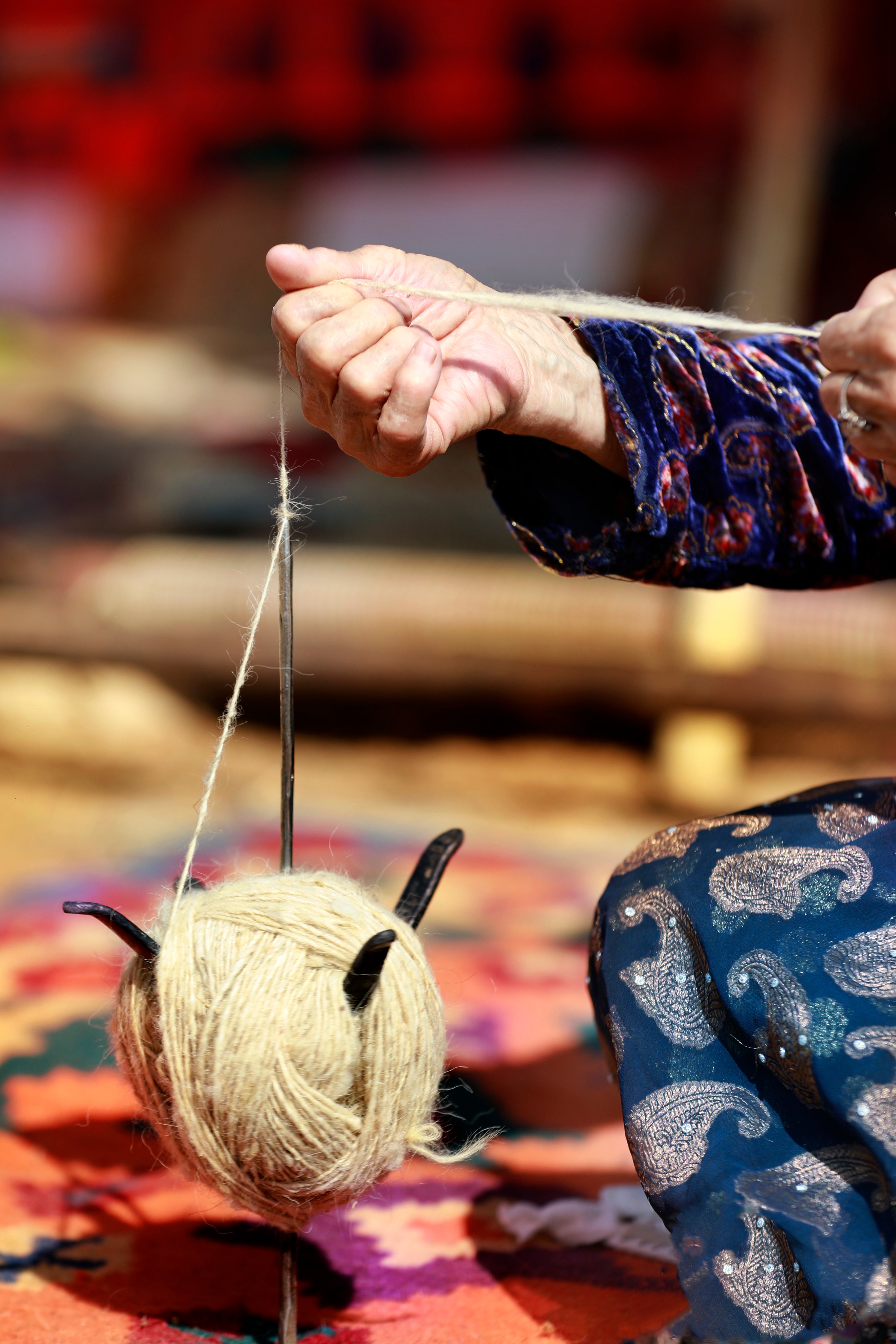
In most cases, the wool is still spun by hand. In a lengthy process, the individual wool threads are repeatedly drawn out and twisted into a strand.

Dyeing the Wool
After the wool has been spun, it is dyed. Natural colour pigments are often used for this, which have been used for centuries for dyeing Persian rugs. A popular example is madder red, which is obtained from the plant Rubia tinctorum.

Looms
Once the material is ready, it goes onto the loom. There are horizontal and vertical looms. In the vertical form, the warp threads are first strung, which determine the base of the rug or Kelim. Then comes the so-called "weft". The weft thread winds horizontally around the warp threads and is woven or knotted.

Knotting & Weaving

Tools
The entire process of making a rug is done by hand. Traditionally, tools are used that were already used hundreds of years ago. This includes the rug comb. This tool is used to firmly beat down the woven or knotted part so that everything sits tightly together.
Finishing Touches
Shortly before the rug is cut from the loom, any imperfections are corrected and the border is worked on all four sides.