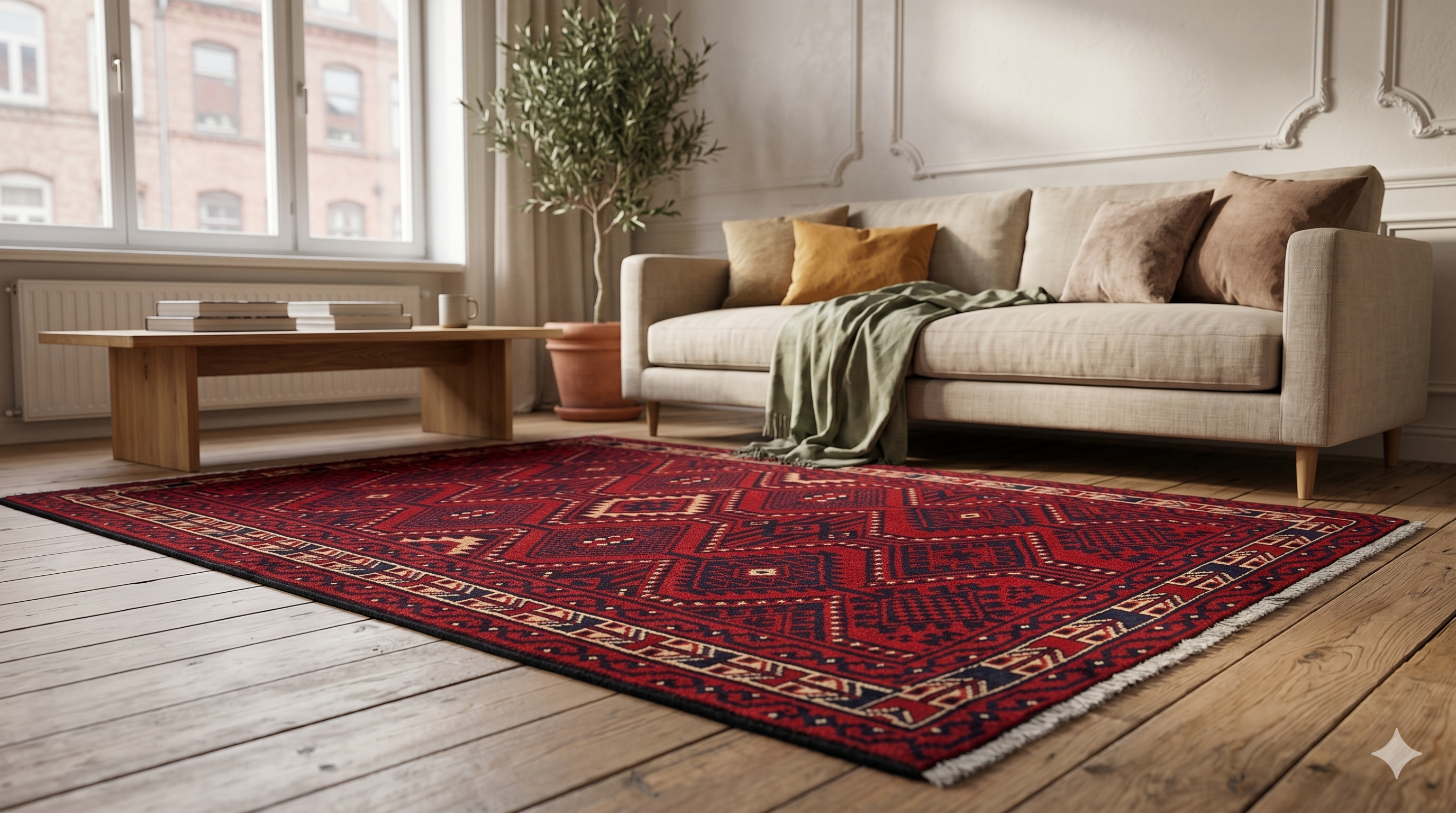
Lori and Loribaft — Tribal Rugs from the Zagros Mountains
TL;DR: A Loribaft rug is a unique, hand-knotted piece crafted by the Lori nomads from the Persian Zagros Mountains. It stands out with its exceptionally fine knotting, high-quality highland wool, and minimalist, geometric patterns. Compared to the more widely known Gabbeh, the Loribaft is denser, softer, and often presents a calmer, more modern design.
What Exactly is a Loribaft Rug?
A Loribaft, literally 'Lori weave', is an evolution of the Gabbeh rug, knotted by the Lori tribe. It uses the same high-quality Zagros wool but is significantly finer and more densely knotted. This allows for more detailed yet minimalist designs and a velvety-soft surface, distinguishing it as a modern, durable, and tradition-rich floor covering.
A Loribaft is more than just a rug; it's a piece of living history, embodying the essence of nomadic craftsmanship. Imagine a Gabbeh refined through generations of skilled hands – that's the Loribaft. It stems from the same tradition and the same artisans as the well-known Gabbeh rugs, yet distinguishes itself through significantly higher quality and fineness. The name itself provides the crucial clue: 'Lori', the name of the tribe, and 'baft', the Persian word for 'knotted' or 'woven'.
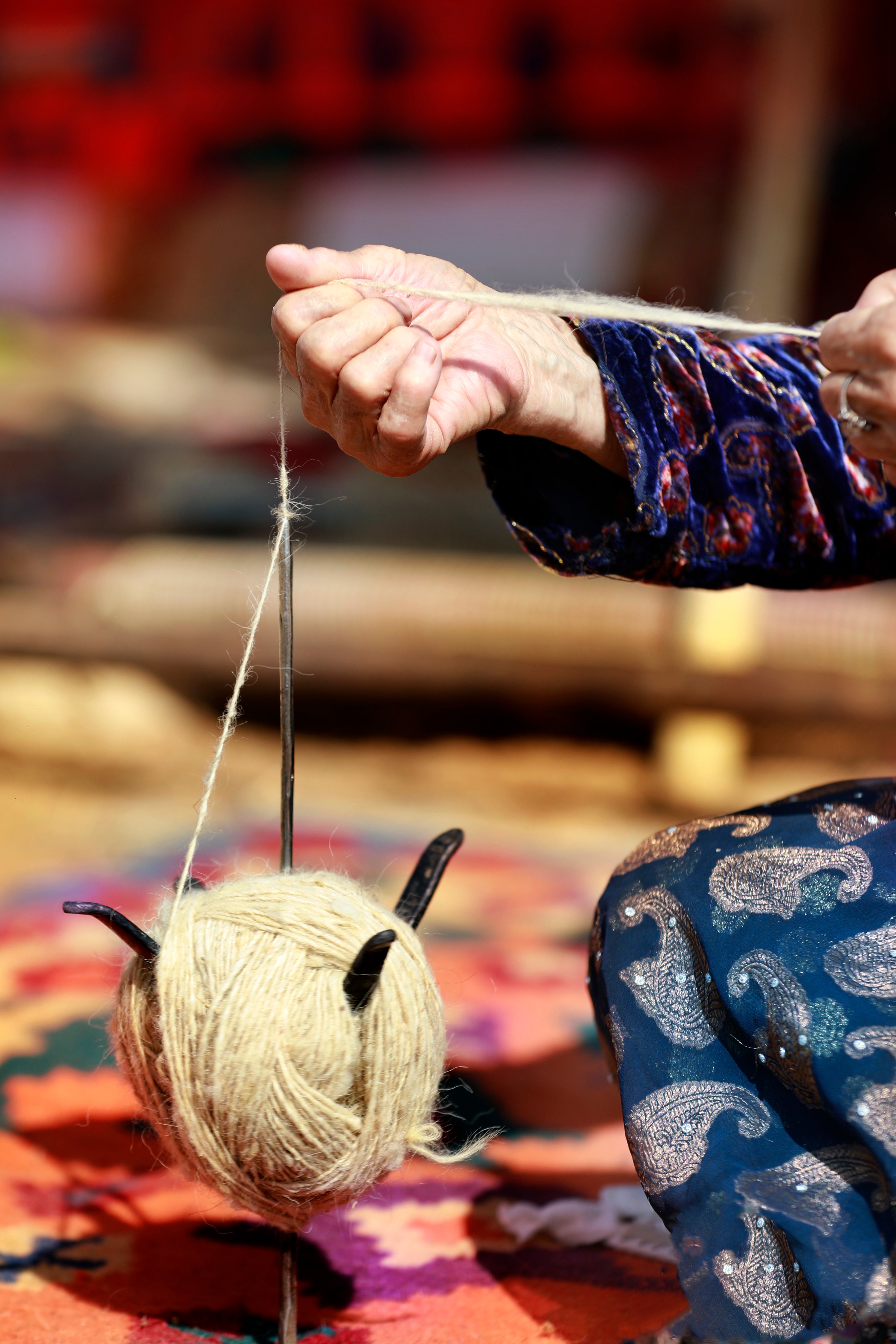
The Lori weavers use particularly fine, hand-spun virgin wool from their own sheep, which graze in the high altitudes of the Zagros Mountains. This wool is rich in lanolin, the natural wool fat, which inherently makes the rug resistant to dirt and moisture. The crucial difference lies in the knot density. While a Gabbeh is rather coarse and rustic, a Loribaft is crafted with a much higher knot count per square metre (approximately 160,000–250,000 knots/m²). The result is a denser, lower pile with an almost velvety feel and a clarity in design not found in a Gabbeh. The patterns remain true to nomadic tradition: geometric, minimalist, and inspired by nature, but executed with greater intricacy. This combination makes the Loribaft a perfect link between traditional craftsmanship and a modern living aesthetic. It belongs to the family of authentic nomadic rugs, but represents, so to speak, the refined, elegant evolution.
| Feature | Loribaft Rug | Gabbeh Rug |
|---|---|---|
| Knot Density | High (up to 250,000 knots/m²) | Low to Medium |
| Pile Height | Short to medium-high, very dense | High, rather loose |
| Feel | Soft, velvety, compact | Soft, but rustic and shaggy |
| Design | Fine, minimalist, geometric | Coarse, abstract, often with animal motifs |
| Aesthetic | Elegant, calm, modern | Original, earthy, cosy |
The Origin: The Life of the Lori in the Zagros Mountains
The Lori are one of Persia's oldest nomadic peoples, residing in the rugged, majestic landscapes of the Zagros Mountains. Their semi-nomadic life, shaped by nature's cycles and sheep farming, is directly reflected in their rugs. Designs draw inspiration from mountains, rivers, and the sparse, expansive land.
To truly understand a Loribaft, you must journey into the Zagros Mountains, a formidable mountain range stretching through the western part of the Persian plateau. Here live the Lori, a people with a millennia-old history, whose culture and way of life are inextricably linked to their environment. They do not reside in fixed cities but move with their flocks between summer and winter pastures – a rhythm dictated by the seasons. This deep connection to nature is the primary source of inspiration for their art.
For Lori women, rug knotting is not merely a livelihood but a central part of their identity and a medium for storytelling. On simple, horizontal looms that are easily transported, they weave the patterns of their homeland into the wool of their sheep. A straight line might symbolise a river, a small square a tent, and diamond shapes the rugged mountain peaks. It's an abstract, minimalist visual language born from direct observation and daily experience. Each rug is thus a personal diary of the weaver, a reflection of her world. This profound cultural heritage of knotting art is passed down from mother to daughter, preserving a tradition that extends far beyond the mere creation of a floor covering.
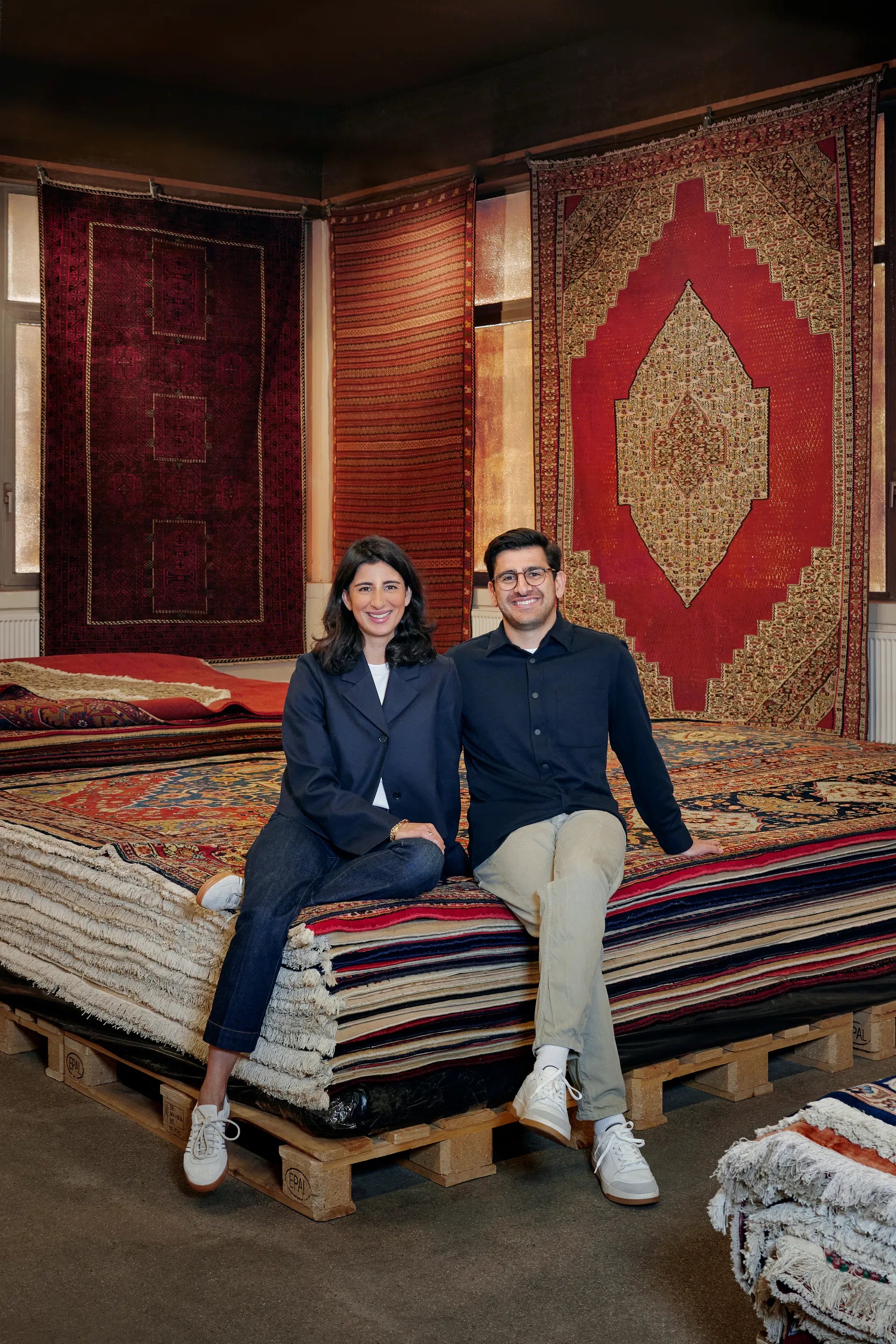
{{ANECDOTE:hamburg}} I recall a Loribaft that arrived at our Hamburg warehouse for quality control a few months ago. It featured a very calm, almost monochrome beige field, but in one corner, a tiny, bright red square was knotted in, barely larger than a fingernail. It almost looked like a flaw, but we immediately knew: this was a signature, a personal touch from the weaver. Perhaps it symbolised her tent in the vast landscape or a blooming poppy in spring. It's precisely these small, human details that, for us, make the difference between a rug and a true Rugtale.
Characteristics of an Authentic Loribaft: Wool, Knots, and Colours

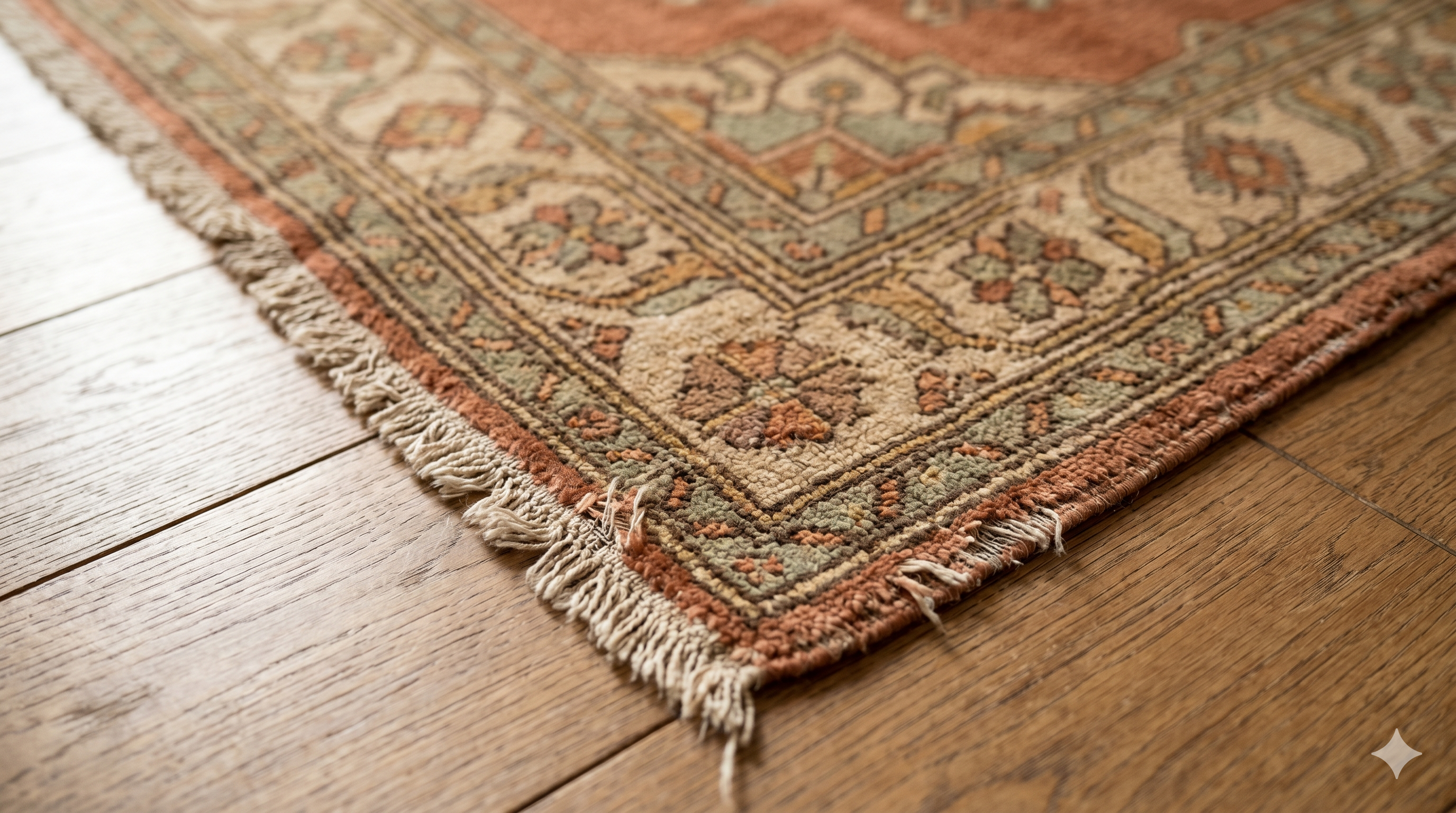
An authentic Loribaft impresses with its excellent material quality. The foundation is hand-spun virgin wool from Zagros mountain sheep, rich in lanolin, making it robust and dirt-repellent. The knot density, up to 250,000 knots per square metre, is significantly higher than a Gabbeh, explaining its soft feel and clear pattern definition.
An authentic Loribaft can be identified by a combination of three key characteristics: its material, knotting, and colouration. These elements are so intricately intertwined that, together, they create a work of art of remarkable quality and durability.
The Wool: It all begins with the wool of the Zagros sheep. These animals live in high, barren altitudes, which makes their fleece particularly dense, robust, and rich in fat. The high lanolin content (wool fat) acts as a natural protective shield: it makes the fibre elastic, dirt-repellent, and surprisingly easy to care for. The wool is traditionally hand-spun. This process gives the yarn an irregular thickness, which later creates a vibrant, organic texture in the rug.
The Knotting: Here lies the biggest difference from a Gabbeh. A Loribaft is crafted with a significantly higher knot density of up to 250,000 knots per square metre. This dense packing of knots results in a lower, yet extremely compact pile. The outcome is a surface that feels velvety and soft, while simultaneously being incredibly hard-wearing. This fineness also allows the weavers to create clearer lines and more detailed geometric patterns that would be lost on a coarser weave.
{{EXPERT_QUOTE:amin|When you run your hand over an authentic Loribaft, you immediately feel the difference. The lanolin makes the wool feel cool and almost slightly waxy, not dry or scratchy. And the density of the knots gives you a sense of substance and durability. It's a quality you can't describe; you have to feel it.}}
The Colours: Traditionally, Loribaft rugs use natural dyes derived from plants, roots, and minerals of the region – such as pomegranate peels for yellows, walnut shells for browns, or madder root for reds. Because hand-spun yarn absorbs dye differently and is often coloured in small batches, subtle colour variations emerge in the finished rug. These characteristic colour fluctuations, also known as Abrash, are not a defect but a sought-after mark of authenticity, testifying to genuine hand craftsmanship. Our commitment to ethical production is also reflected in our STEP certification, which ensures fair working conditions for the weavers.
Loribaft vs. Gabbeh: The Subtle Difference

While both can originate from the same tribe, the main distinction lies in their fineness. A Loribaft is essentially a premium-quality Gabbeh. It features a shorter pile, a much higher knot density, and consequently, a more velvety surface. While Gabbehs often appear coarse and rustic, the Loribaft exudes a calmer, more modern elegance.
At first glance, Loribaft and Gabbeh rugs might appear similar. Both originate from the nomadic tradition of Persia, utilise geometric patterns, and are crafted from the same high-quality wool. However, upon closer inspection, subtle yet crucial differences emerge, categorising them distinctly. One could say the Gabbeh embodies the soul of raw, untamed nature, while the Loribaft represents its cultivated, refined interpretation.
The Gabbeh is renowned for its high, shaggy pile and often very simple, almost childlike patterns. It is the epitome of cosiness and authenticity. Its knotting is relatively loose, which gives it its soft, bushy character. Designs are often large-scale and highly abstracted, sometimes featuring stylised animals or human figures. A Gabbeh brings a warm, earthy, and very relaxed atmosphere to a room.
The Loribaft, in contrast, is the disciplined, elegant evolution. Its pile is significantly shorter and, due to the high knot density, much more compact. The surface is not shaggy, but velvety and smooth. This allows for much more precise pattern definition. While the designs remain minimalist and geometric, they are often more intricate and symmetrically arranged. The colour palette is frequently more restrained, often in monochrome tones or with gentle contrasts. While a Gabbeh can be loud and cheerful, a Loribaft is quieter, more meditative, and exudes a timeless modernity. If you want to compare the two styles directly, it's best to look at the differences among our Gabbeh rugs and hold the images next to a Loribaft. The difference in aura is immediately palpable.
How a Loribaft Perfectly Fits into Your Home
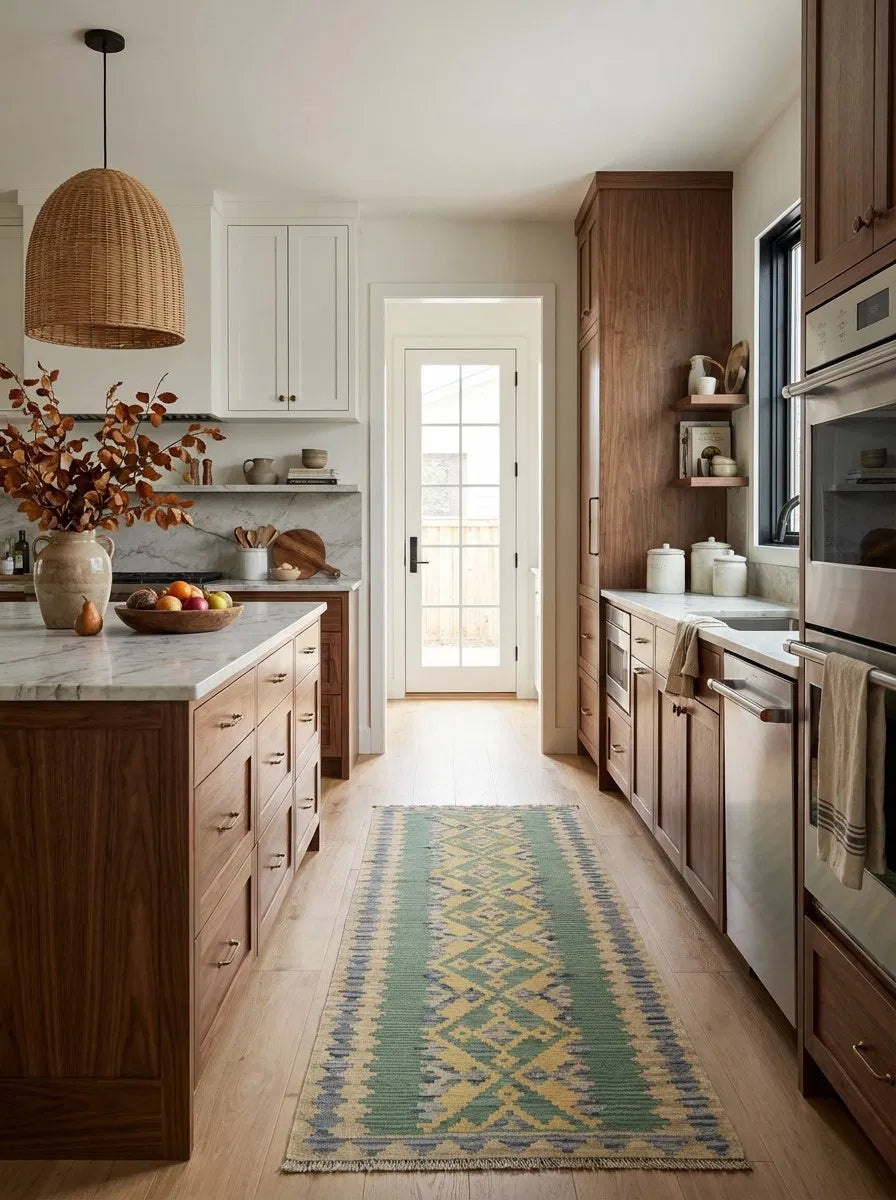
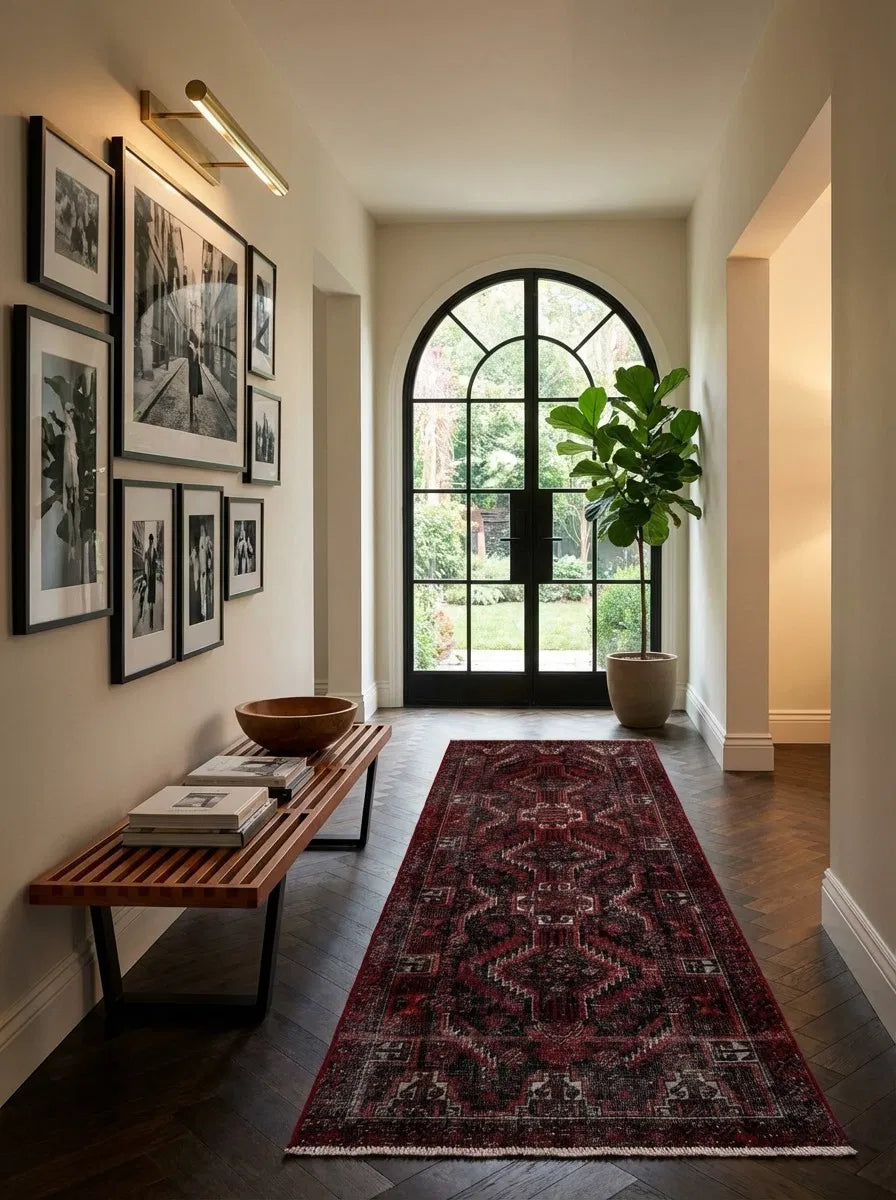
Thanks to its minimalist aesthetic and often monochrome colour palette, a Loribaft seamlessly integrates into modern, Scandinavian, or minimalist interior styles. It grounds the room without dominating it. Its dense wool creates a warm, cosy atmosphere and improves room acoustics. A timeless classic for your lounge, bedroom, or study.
A Loribaft is a true chameleon, fitting into many home concepts with its understated elegance. Its strength lies in imparting character and warmth to a room without vying for the spotlight.
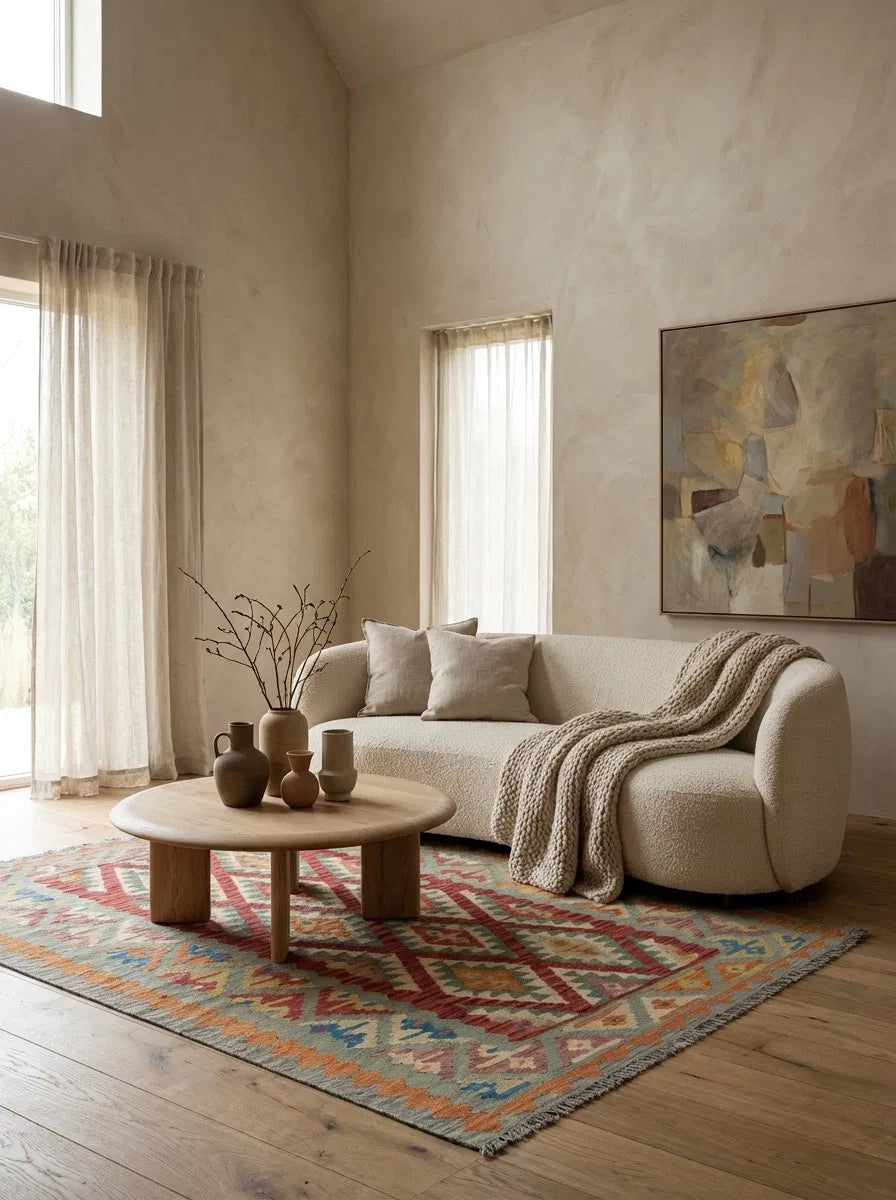
For Modern and Scandinavian Styles: In a minimalist or Scandinavian-influenced setting, dominated by clean lines, light colours, and natural materials like wood and linen, a Loribaft acts as the perfect anchor. Its geometric patterns echo the linearity of furniture, while its soft wool texture breaks the often cool austerity, creating an inviting cosiness. A cream-coloured or grey Loribaft can visually expand a room while simultaneously adding structure.
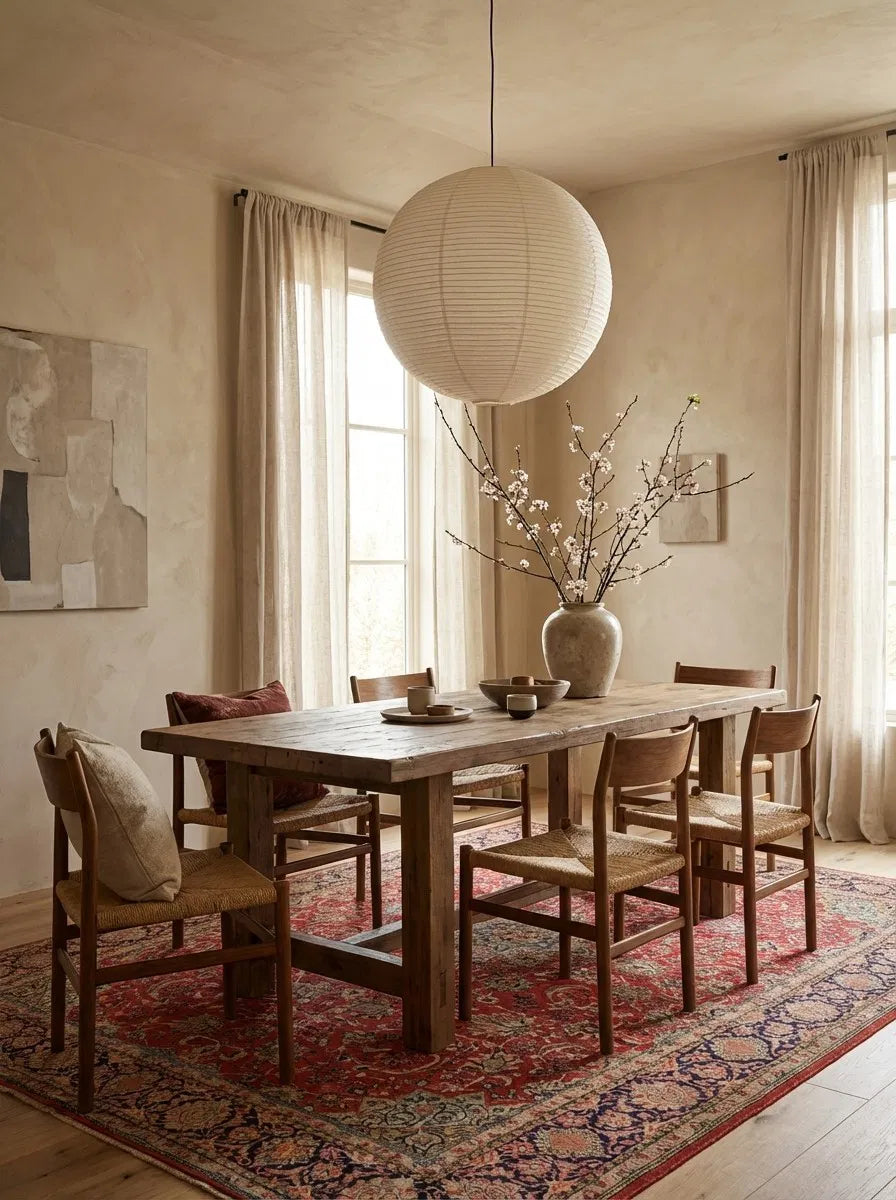
As a Calming Centrepiece in Eclectic Interiors: Even in a more colourful, eclectic mix of different styles, a Loribaft can work wonders. Choose a model in a calm, single-colour variant to create a visual connection between diverse furniture pieces and provide a harmonious base for the room. It becomes the resting element that balances the vibrancy of its surroundings.
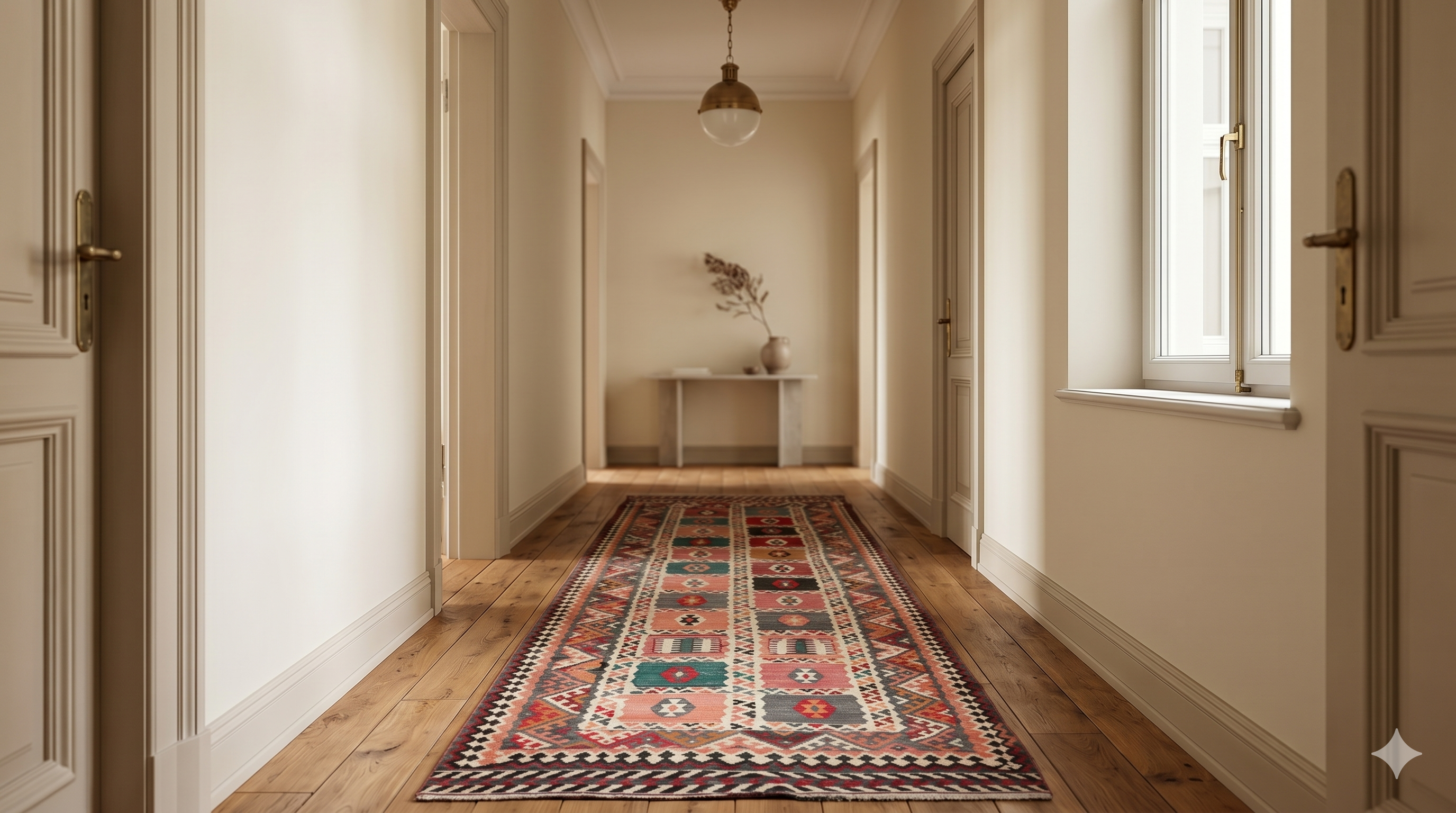
Functional Benefits: Beyond its aesthetic appeal, a Loribaft also offers practical advantages. Its dense wool pile is an excellent sound dampener, noticeably improving acoustics in rooms with hard floors like parquet or tiles. Furthermore, it naturally insulates, providing pleasant warmth underfoot. Being extremely durable and easy to care for, it's ideally suited for high-traffic areas such as the living room or hallway. To ensure your new rug fits perfectly, it's important to find the perfect size for your space.
FAQ
What is the difference between Lori and Loribaft? 'Lori' is the name of the semi-nomadic tribe from the Persian Zagros Mountains, renowned for their exceptional knotting artistry. 'Loribaft' is the name of the rug itself, literally meaning 'knotted by Lori' or 'Lori weave'. It thus describes the product made by this specific people, emphasising its origin and artisanal tradition.
Are Loribaft rugs soft? Yes, they are exceptionally soft. This softness results from two factors: the use of fine, lanolin-rich highland virgin wool and a very high knot density. The numerous tightly packed knots create a compact, velvety surface that feels wonderfully soft and luxurious underfoot, yet remains extremely robust.
How do I recognise an authentic Loribaft? You can identify an authentic Loribaft by a combination of several features. Feel the wool: it should feel slightly 'greasy' and cool, indicating a high lanolin content. Check the reverse side: the knots should be dense and even. The rug should be flexible, not stiff. Look for subtle colour variations (Abrash) in the pile, a clear sign of natural dyeing and hand craftsmanship.
Are Loribaft rugs durable? Absolutely. They are among the most hard-wearing hand-knotted rugs. The high natural lanolin content of Zagros wool acts like a waterproofing agent, making the fibres inherently dirt and water-repellent. Coupled with the extremely high knot density, this creates a very durable weave that withstands heavy use for decades.
Where does the name Loribaft come from? The name is a direct designation of origin. It combines the name of the people, the 'Lori', and the Persian word 'baft', which means 'woven' or 'knotted'. Thus, the name Loribaft is a promise of quality, directly referencing the masterful weavers of this tribe and their centuries-old tradition.
How do I care for my Loribaft rug? Care is straightforward. Regular vacuuming with a smooth nozzle (without a rotating brush) is usually sufficient. For stains, act immediately: blot liquids with a clean cloth, do not rub. For a thorough clean every few years, we recommend a professional, organic rug wash, just like the one we perform on every piece in our Hamburg warehouse before sale.
The world of the Lori and their Loribaft rugs is a fascinating example of living tradition and timeless design. Each piece tells a story of the mountains, the nomadic life, and the artistry of its creator.
Are you curious to discover the subtle differences and velvety feel for yourself? Browse our collection of hand-picked nomadic rugs. With our {{AR_VISUALIZER}} AR visualiser, you can even see directly on your smartphone how such a rug would look in your own room.