




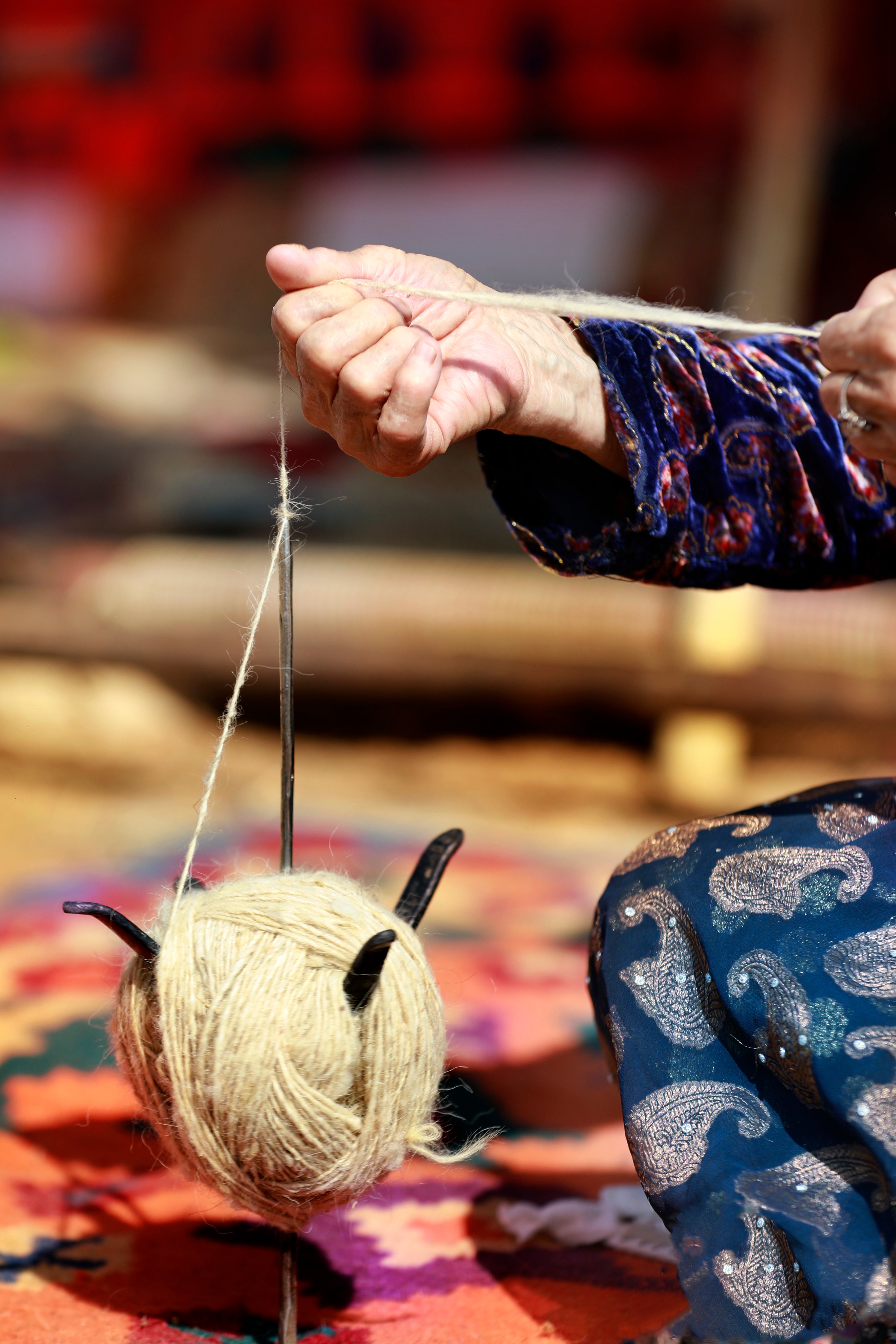
Item: Hole in Your Rug — When is Repair Worthwhile?
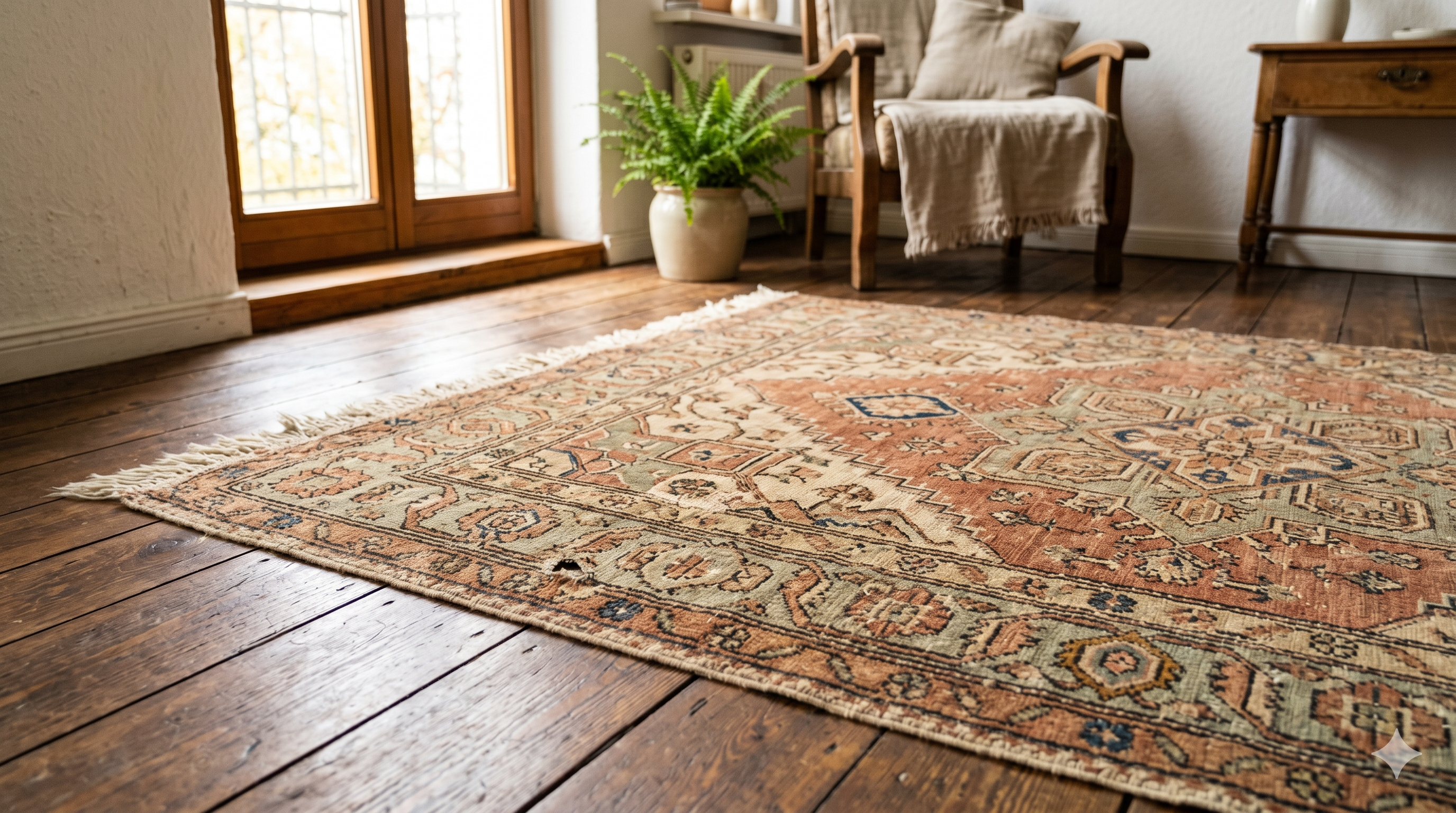
Hole in Your Rug — When is Repair Worthwhile?
TL;DR: Whether repairing a hole in your rug is worthwhile depends on four factors: its material value, emotional significance, the type of damage, and the repair costs. For unique, hand-knotted pieces, repair is almost always a sensible choice to preserve the rug's value and story. As a rule of thumb, if the costs exceed 50% of the rug's value, you should carefully weigh the benefits.
Damage Analysis: What Kind of Hole Does Your Rug Have?

The first step is a precise analysis of the damage. Is it irregular holes from moth damage, a clean tear, a burn hole, or age-related wear and tear? The cause determines the complexity and method of repair, and is crucial for cost estimation. Examine both the top and underside of the rug in good light to understand the full extent.
Not all holes are created equal. Before you consider a repair, you need to understand the 'opponent'. Take your time and examine the damaged area closely. Often, the appearance of the hole already reveals its cause, which is crucial for choosing the right repair method.
Moth damage is the most common culprit for wool rugs. Clothes moth larvae feed on the keratin in the wool. You'll recognise the damage by irregularly shaped holes, where often only the wool pile is missing, while the cotton foundation (warp and weft) has remained intact. Sometimes you might also find fine webbing or sand-like droppings from the larvae.
Tears and cuts are usually mechanical in origin. Carelessly moving furniture, a sharp object, or a rug knife blade can cause straight-line damage with clean edges. Here, the rug's structure – meaning warp and weft – is directly severed, requiring immediate securing to prevent further fraying.
Burn holes, caused by glowing cigarette ash or a candle, are particularly tricky. They have dark, charred edges, and the fibres are often fused together. The damage usually extends deep into the fabric and requires very careful removal of the burnt material before reconstruction is possible.
Age-related wear and tear rarely appears as a clear hole, but rather as large, thin, worn-through areas. In these 'bald' areas, the foundation fabric of warp and weft becomes visible. This often happens in high-traffic areas, such as in the hallway or in front of the sofa.
| Type of Damage | Typical Appearance | Cause | First Action |
|---|---|---|---|
| Moth Damage | Irregular holes, missing pile, foundation often intact | Clothes moth larvae | Immediately vacuum rug thoroughly (both sides) and isolate |
| Tear / Cut | Straight, clean edges, foundation severed | Sharp objects, furniture backs | Secure edges (e.g., with tape on the reverse), avoid pressure |
| Burn Hole | Dark, charred edges, melted fibres | Embers, fire, hot objects | Carefully remove loose, charred particles, do not rub |
| Wear and Tear | Large, thin, bald areas, visible foundation | High and uneven stress | Move rug to a less frequented area, pause use |
An accurate diagnosis is the basis for everything else. If you're unsure, take some good photos in daylight and consult an expert. You can also find more information on proper care in our guide to professional rug care and cleaning.
The Decisive Question: Value vs. Repair Costs
Repairing a hand-knotted rug is an investment in preserving its value. Compare the estimated repair costs with its material and emotional value. A Persian heirloom justifies higher costs than a machine-made piece. If repair costs are significantly below 50% of the rug's value, the decision to repair is usually clear.
Once you know what kind of damage you're dealing with, the crucial question arises: Is the effort worthwhile? The answer is a weighing of the rug's value against the anticipated costs of restoration.
The material value of a hand-knotted rug is determined by factors such as origin, age, knot density, material, and the rarity of the pattern. A finely knotted city rug from Nain or a rare Kelim from the Gashgai nomads has considerable value that justifies an elaborate repair. For a machine-made rug made from synthetic fibres, however, the repair costs can quickly exceed its new value.
At least as important is the emotional value. A rug that has been in the family for generations, a wedding gift, or a souvenir from a special trip – such pieces carry stories that cannot be quantified in pounds. Here, repair is often a labour of love, to preserve a piece of family history. Our own family history since 1952 shows us daily how deep such connections can be.
{{EXPERT_QUOTE:amin|“I often see customers in our Hamburg warehouse bringing in an heirloom from their grandparents. Sometimes the damage is significant. But then they tell the story behind the rug, and you immediately feel: this isn't just about wool and knots. It's about preserving a connection. A professional repair not only makes the hole invisible, but it honours that history and allows it to be passed on to the next generation.”}}As a rule of thumb, the 50% rule has proven effective: If the estimated repair costs are significantly less than half of the rug's material value, repair is almost always an economically sound decision. If they are higher, the emotional value becomes the decisive factor. For {{LINK:collection:all-rugs|our hand-knotted rugs}}, repair is almost always the right choice, as each piece is unique.
Professional or DIY? Limits of Self-Help for Hand-Knotted Rugs
For hand-knotted rugs, we strongly advise against DIY repairs for holes. Patching with unsuitable yarn or incorrect techniques destroys the structure and permanently diminishes its value. Only securing a loose thread is harmless. For everything else, a professional with knowledge of the original knotting technique is essential to preserve the unique piece.
The temptation to grab a needle yourself for a small hole is great. But especially with a hand-knotted rug, you can destroy more than you save. Repairing such a piece is a craft that requires years of experience.
What you can do yourself is limited to first-aid measures: a single loose thread protruding from the pile can be carefully trimmed to pile level. Never pull on it! A fraying edge can be provisionally secured on the reverse with fabric tape to prevent further damage until a professional takes over.
The dangers of DIY repairs are manifold:
- Wrong Material: Commercially available yarn does not have the same strength, colour, and feel as hand-spun wool dyed with natural colours. The repaired spot will always remain visible.
- Incorrect Tension: If the foundation fabric is patched with too much or too little tension, the rug will ripple or contract at that spot. The rug will never lie flat again.
- Incorrect Technique: Every rug has a specific knotting style (e.g., Persian or Turkish knot). Incorrect knotting irrevocably destroys the symmetry and structure of the pattern.
In our experience from inspecting over 6,290 hand-knotted pieces, we've seen many well-intentioned but unfortunately value-diminishing repair attempts. A professional, on the other hand, possesses the knowledge and tools – special needles, combs, and the ability to re-dye yarn to match the original – to carry out a repair almost invisibly and preserve the value of your rug.
A Look Inside Our Hamburg Warehouse: How We Repair at Rugtales

In our Hamburg warehouse, every rug undergoes a meticulous process. After a precise analysis, we stabilise the area around the hole. The rug is then organically washed. Our experts then hand-dye matching yarn and faithfully reconstruct the warp, weft, and pile. This way, the repair becomes part of the rug's story.
Professional repair is an art in itself. At Rugtales, we have perfected this process over generations. Every rug that comes to our Hamburg warehouse for repair is treated with the utmost respect for the craftsmanship.
Step 1: Analysis and Preparation First, the damage is precisely documented. We analyse the knotting style, knot density, and the materials used. The area around the hole is carefully secured to prevent further expansion during processing.
Step 2: Organic Hand Wash Before any repair, there is a gentle but thorough cleaning. A professional, organic hand wash removes deep-seated dirt and optimally prepares the fibres for repair. Only clean wool takes colour correctly and can be perfectly processed.
Step 3: Material Sourcing and Dyeing This is the crucial step. We search for wool that matches the original in strength and structure. This yarn is then hand-dyed to match the exact shade of the rug – including the natural colour variations, known as Abrash, which distinguishes every rug.
Step 4: The Reconstruction Now the actual handwork begins. First, the warp and weft threads, which form the rug's skeleton, are re-threaded and tensioned. Then, the pile is re-knotted knot by knot using the original technique until the pattern is complete again.
Step 5: The Finishing Finally, the new pile is shorn to the height of the surrounding pile. The repaired area is combed and brushed so that it blends seamlessly into the overall appearance. After a final quality control, the rug is ready for its second life.
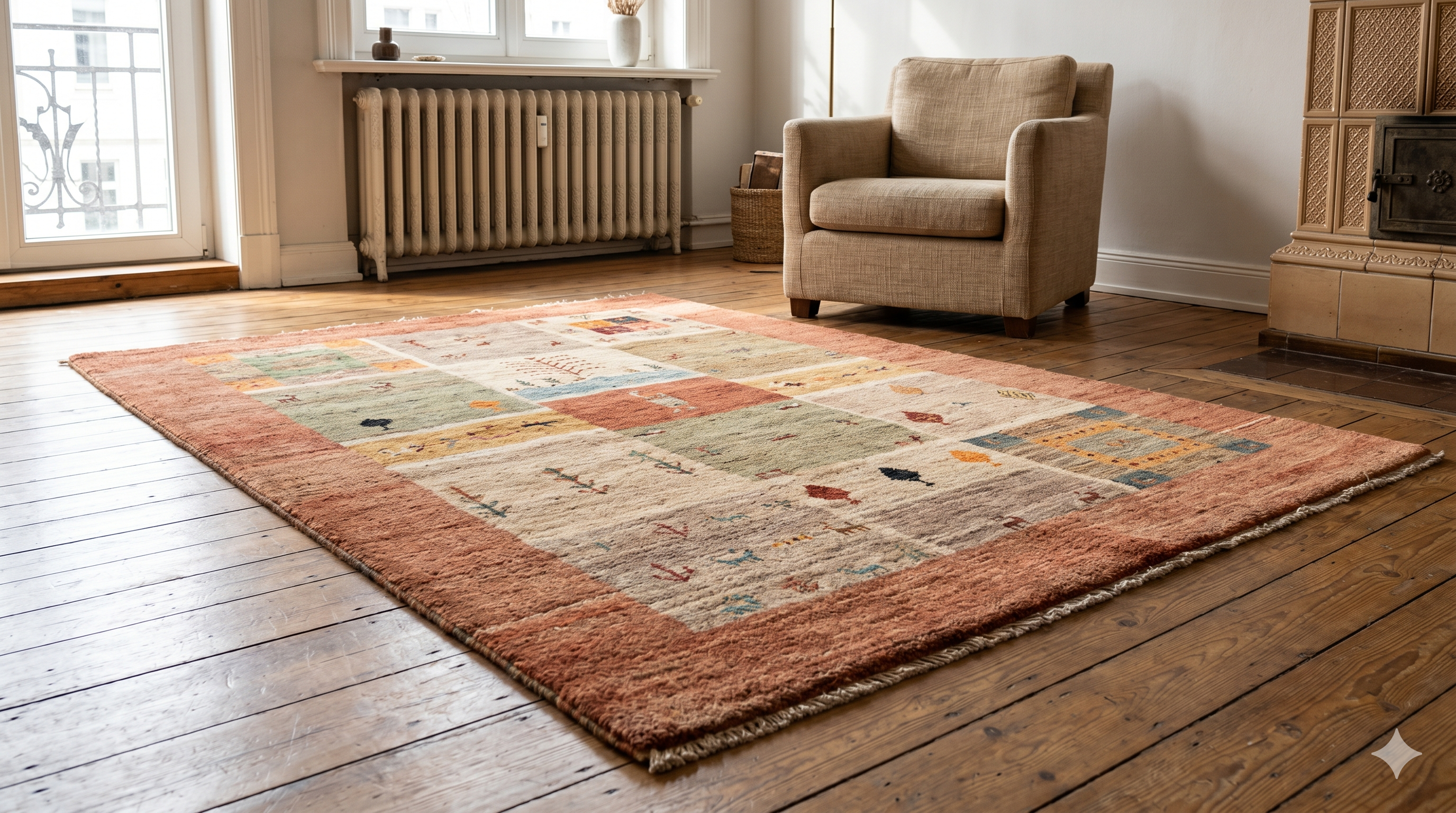
{{ANECDOTE:hamburg}}I remember a beautiful, old {{LINK:collection:gabbeh|robust Gabbeh rug}} that came to us with a long tear, caused by a heavy cabinet being carelessly dragged across it. The customer was inconsolable. After four weeks of intensive work, we were able to return the rug to her. She searched for minutes for the repaired spot and couldn't find it. That sparkle in her eyes – that's why we love this craft.
Prevention is Better Than Cure: How to Protect Your Rug

The best protection against holes is active prevention. Rotate your rug 180 degrees every six months to prevent uneven wear. Use furniture glides under heavy pieces and vacuum regularly – including the underside. Natural moth repellents like cedar wood or lavender keep pests away and preserve the wool.
The best repair is the one that isn't needed at all. With a few simple habits, you can significantly extend the lifespan of your hand-knotted rug and actively prevent damage.
- Rotate regularly: Rotate your rug 180 degrees every six to twelve months. This ensures even wear and exposure and prevents traffic paths or sun exposure from leaving uneven marks.
- Avoid pressure points: Heavy furniture pieces such as sofas, cabinets, or table legs can permanently compress the pile and eventually damage the fabric. Use felt glides or special rug coasters to distribute the weight better.
- Vacuum correctly: Vacuum your rug at least once a week with a smooth nozzle, never with a rotating brush, as this can pull out the fibres. Always vacuum in the direction of the pile. Don't forget to vacuum the reverse side and the floor underneath every few months – moths love to nest here.
- Moth prevention: Moths love darkness, quiet, and organic fibres. Regular vacuuming, airing, and moving the rug is the most effective protection. Natural repellents like lavender sachets or cedar wood pieces, which you place under the rug, can also help.
- Treat stains immediately: Spilled liquids should be blotted immediately with a clean, absorbent cloth (e.g., cotton or kitchen paper). Never rub, as this only works the stain deeper into the fibre. For stubborn stains, {{LINK:pages:rug-care|professional rug cleaning}} is the safest solution.
A particularly durable and {{LINK:collection:kilim-sumak|easy-care Kelim}} might forgive more than a fine silk rug, but fundamentally, every hand-knotted piece will thank you for a little attention.
FAQ
How much does it cost to repair a small hole in a rug? The cost depends heavily on the size of the hole, the knot density, and the complexity of the pattern. Calculation is often per square centimetre. For very small repairs, there is usually a minimum flat fee, which can start at around £80 to £100. However, a detailed quote from a specialist is essential.
Can moth damage in a wool rug be repaired? Yes, repairing moth damage is one of the most common and routine tasks for wool rugs. After the area has been thoroughly cleaned, any damaged foundation structure of warp and weft is reinforced. Then, the missing wool pile is re-knotted thread by thread in the original colour and technique.
How long does a professional rug repair take? The duration is highly variable. A small repair can be completed in two to three weeks. For major damage, complex patterns, or if special yarn needs to be dyed first, a repair can take six weeks or longer. Quality and care simply take their time here.
Is it worth repairing a machine-made rug? In most cases, unfortunately not. The costs for manual repair often far exceed the new value of a machine-made rug. Repair is a worthwhile investment primarily for hand-knotted unique pieces, as genuine material and intrinsic value are preserved here.
Can you tell if a spot on a rug has been repaired? If the repair has been carried out by a true professional, the spot is practically invisible to an untrained eye from the front. The new pile blends seamlessly in colour, pattern, and structure. An expert might be able to detect the newly knotted sections on the reverse of the rug, but this is not a flaw; rather, it's a sign of professional restoration.
Is your rug beyond repair, or are you looking for a robust companion for the future? A hole can often be an opportunity for something new. Discover our hand-picked selection of {{LINK:collection:nomadic-village|durable nomadic rugs}}, whose dense wool and traditional knotting are made to last for generations. {{AR_VISUALIZER}} With our AR Visualiser, you can view each piece directly in your room and find the perfect unique rug for your home.