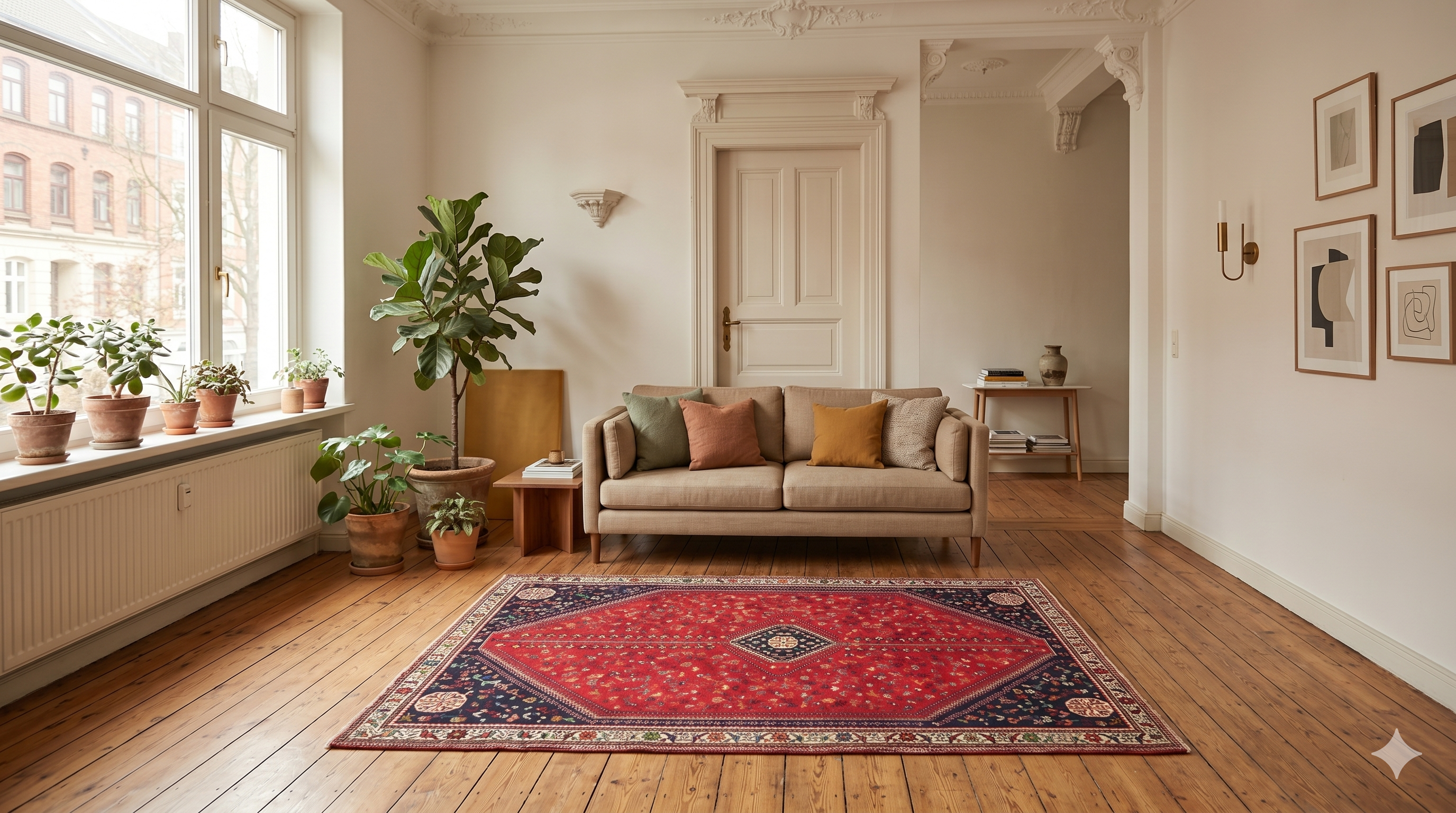
The Gashgai Nomads and their Weaving Craft
TL;DR: A Gashgai rug is a hand-knotted work of art from the Gashgai nomads of the Persian Zagros region. It's characterised by robust highland wool, vibrant natural dyes, and geometric, nature-inspired patterns. Each rug tells a personal story and is knotted on a horizontal loom, giving it an authentic, lively character.
Who are the Gashgai Nomads?
The Gashgai are a historic nomadic people from the highlands of the Zagros Mountains in the former Persian Fars province. For centuries, they have lived by the rhythm of the seasons, moving their herds between summer and winter pastures twice a year. Their weaving art is deeply rooted in this way of life, serving not only for trade but also for daily use.
Imagine a life not dictated by the clock, but by the changing of the seasons. A life where Your home isn't a fixed place, but a path that guides You and Your family twice a year through the stunning landscapes of the Zagros Mountains. This is the world of the Gashgai, one of Persia's most renowned and historically significant nomadic tribes. Their home is the vast highlands of the Fars region, a land of rugged beauty that has always shaped their art and craft.
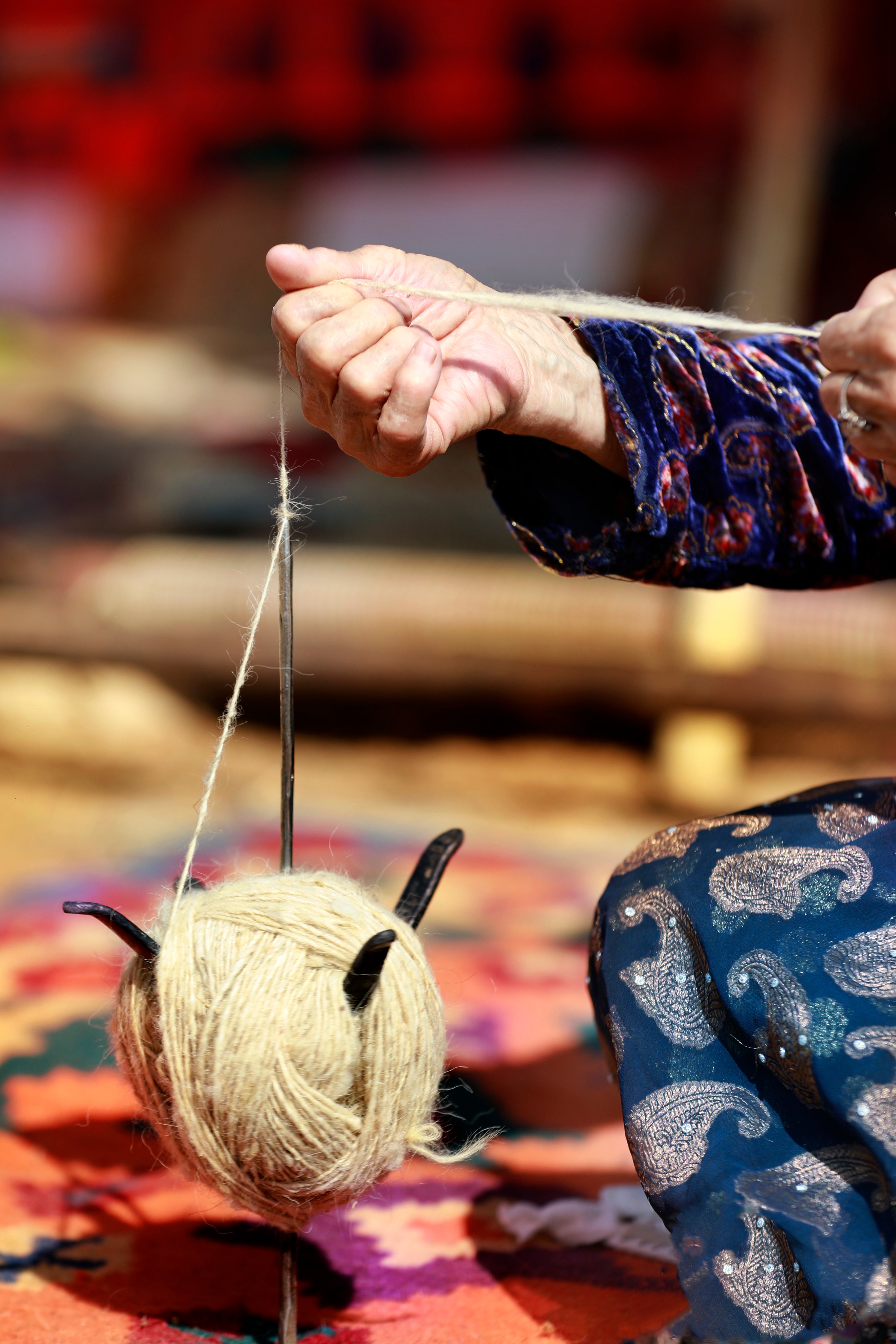
The Gashgai live off and with their sheep herds. The wool from these animals is the foundation of their survival and creativity. Over generations, the Gashgai women have developed a weaving art that is far more than just producing floor coverings. Their rugs are tents, blankets, saddlebags, and, above all, an expression of their identity and history. The knowledge of patterns, dyeing techniques, and knotting methods is passed down from mother to daughter, an oral and practical tradition as old as the people themselves. This deeply rooted tradition is why authentic nomadic rugs have such a powerful, honest appeal.
Amin Ipektchi, Co-Founder: "When I hold a Gashgai in my hands, I immediately feel the connection between the rugged life of the nomads and the warmth of the rug. You can see the weaver's signature in every fibre. Often we discover small, intentional 'imperfections' or a unique symbol she has woven in just for herself. This isn't mass-produced; it's a living diary."
The Characteristics of a Genuine Gashgai Rug
A genuine Gashgai rug stands out for its materiality and craftsmanship. It is knotted from hand-spun virgin wool from mountain sheep, which is rich in lanolin and makes the rug extremely durable. The knotting is done on horizontal looms, leading to charming irregularities. Vibrant, natural colours and geometric patterns are also typical.
A Gashgai is not a rug that strives for perfection. On the contrary, its beauty lies in its honesty and artisanal character. This starts with the material itself: the virgin wool used comes from sheep living in the high altitudes of the Zagros Mountains. Their wool is firmer, thicker, and naturally contains more lanolin (wool grease). This lanolin acts as a natural protective film, making the rug dirt-repellent and incredibly robust.
Another crucial characteristic is the loom. Unlike in urban workshops, where huge, vertical looms are used, the Gashgai nomads use a horizontal loom. This is essentially a simple frame that lies on the ground and can be quickly assembled and disassembled – perfect for a life on the move. The weaver often sits directly on the already-knotted part of the rug. This method leads to small, charming irregularities in shape and density, which give each piece its unique character. The colours also tell a story. Traditionally, only natural dyes from plants and minerals of the region are used, such as madder root for red, indigo for blue, and pomegranate peels for yellow. This leads to the typical natural colour variations, also known as Abrash, which attest to their authentic origin.
| Feature | Gashgai (Nomadic Rug) | City Rug (e.g., Nain) |
|---|---|---|
| Loom | Horizontal, mobile | Vertical, stationary |
| Material | Hand-spun highland wool | Finer, often machine-spun wool, silk |
| Design | Geometric, from memory | Floral, symmetrical, from template (Kartun) |
| Character | Lively, original, rustic | Elegant, precise, formal |
| Warp/Weft | Mostly wool | Mostly cotton |
The Secret Language of Symbols and Patterns

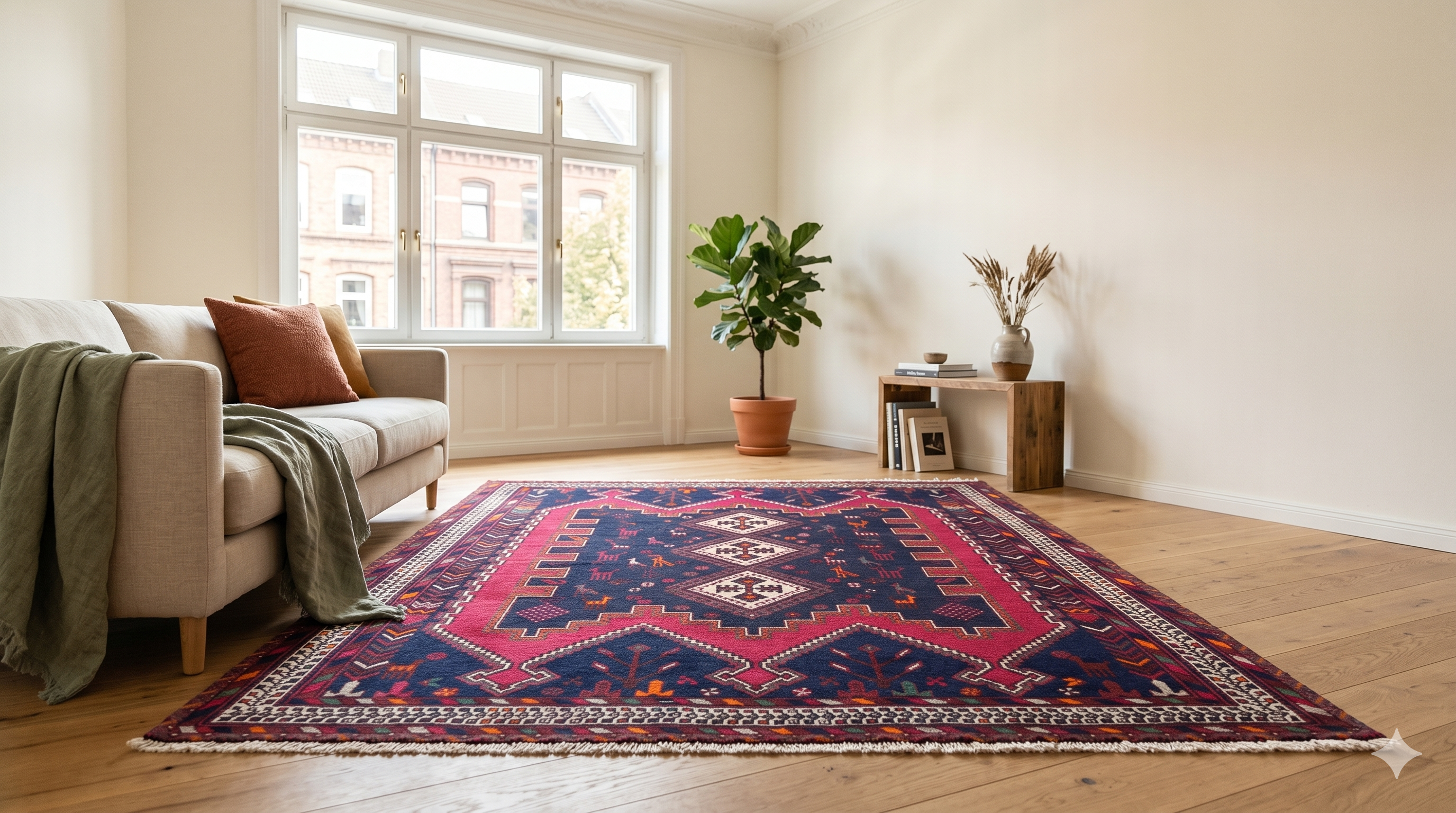
Every Gashgai rug is a visual diary, its symbols telling stories of courage, fertility, and nomadic life. Common motifs like the lion represent strength, birds symbolise paradise, and the rhombus shape represents the eye, protecting against evil. These patterns are not mere ornaments, but profound cultural expressions.
A Gashgai rug is rarely knotted from a fixed template. The patterns and symbols spring from the weaver's imagination, memory, and surroundings. She weaves her wishes, fears, and daily life into the wool. This makes each rug a unique piece that tells a very personal story. However, some motifs reappear consistently and have a fixed meaning within the tribal culture.
The most famous motif is probably the lion, an ancient Persian symbol for courage, strength, and leadership. For the Gashgai, who live in a wild and untamed nature, this symbol holds a special power. Often, stylised depictions of people, birds, dogs, or horses can also be found – a representation of daily life. Geometric shapes like rhombuses or hooks often have a protective function. A rhombus can symbolise an eye that wards off the "evil eye," while hook-like patterns stand for protection and defence. The art lies in arranging these symbols in a harmonious, often medallion-like composition, surrounded by a rich border. This profound symbolism is one reason why, in our over 70-year company history, we have been privileged to inspect over 6,290 of these artworks for our customers. It is an honour to be part of this long tradition, which we have nurtured since our founding in 1952.
From the Zagros Mountains to Our Hamburg Warehouse

The journey of a Gashgai rug to Your home finds its final, crucial stage with us in Hamburg. Each individual piece, which we source directly from the weaving communities, is carefully inspected in our warehouse, organically hand-washed, and expertly restored if necessary. This way, we ensure that the heritage of the Gashgai arrives with You in the best quality.
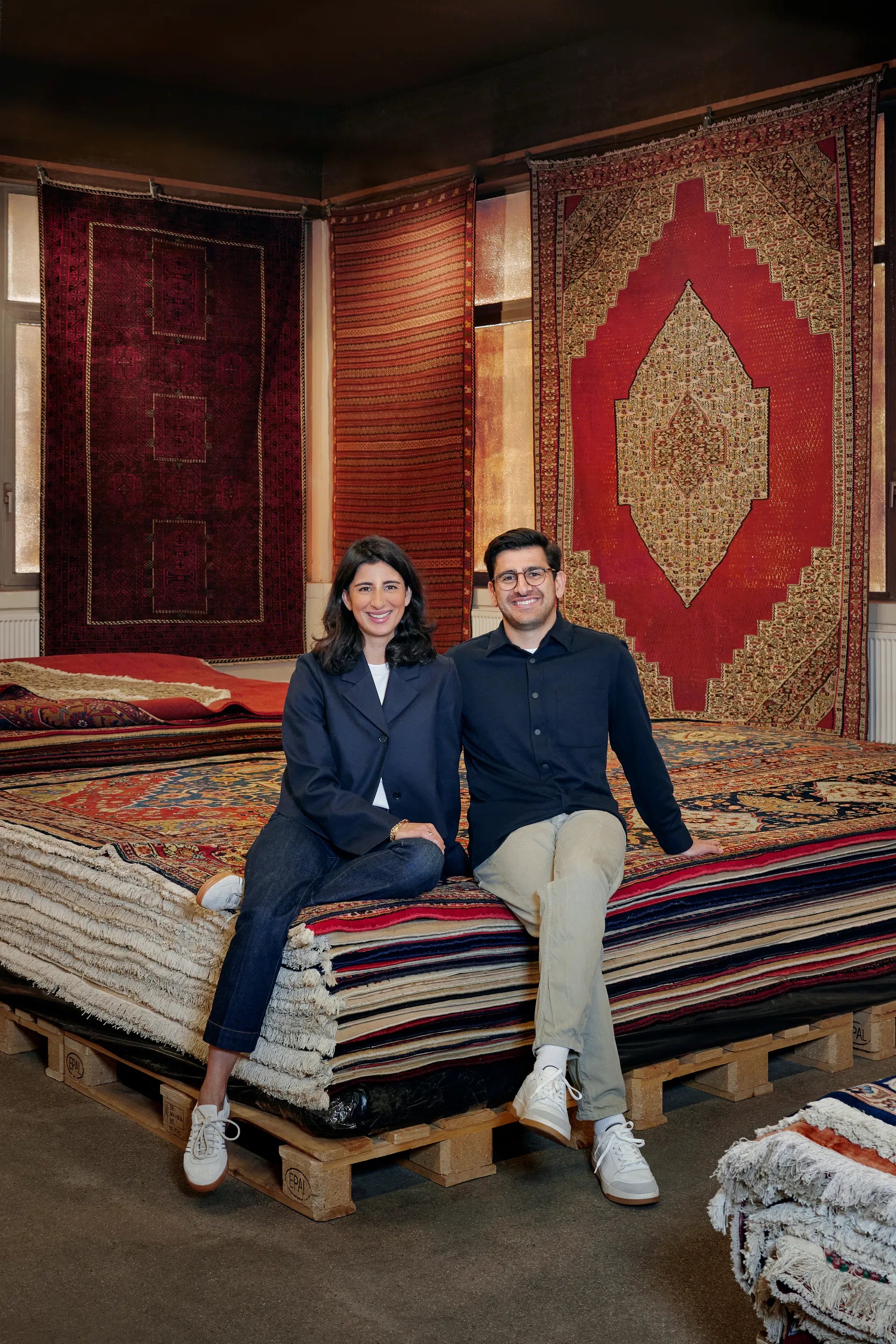
Our relationship with the weaving communities is based on decades of trust and fair trade practices, as evidenced by our certifications from STEP and CARE & FAIR. When a Gashgai rug arrives at our Hamburg warehouse after its long journey, the most important part of our work begins. Each piece is personally handled by my brother Amin or myself, and checked for its quality, condition, and authenticity. We examine the knotting, the wool, and the colours closely.
I remember a Gashgai we unpacked a few months ago. It had a beautiful, deep indigo blue. On closer inspection, I discovered a tiny, woven-in symbol in one corner that completely deviated from the pattern: a small bird, barely larger than a fingernail, in vibrant yellow. It was clear that this was the weaver's very personal signature, a moment of creativity that only she knew. It's precisely these moments that make our work so special.
After inspection, every rug undergoes our organic wash. This is a traditional hand wash with pH-neutral soap and plenty of clear water, which preserves the wool fibres and makes the colours shine again. Should we find small damages, these are expertly repaired by our experienced restorers to ensure the rug's longevity. Only when a rug has gone through this entire process and meets our high standards is it ready for a new home.
How a Gashgai Rug Fits into Your Modern Home

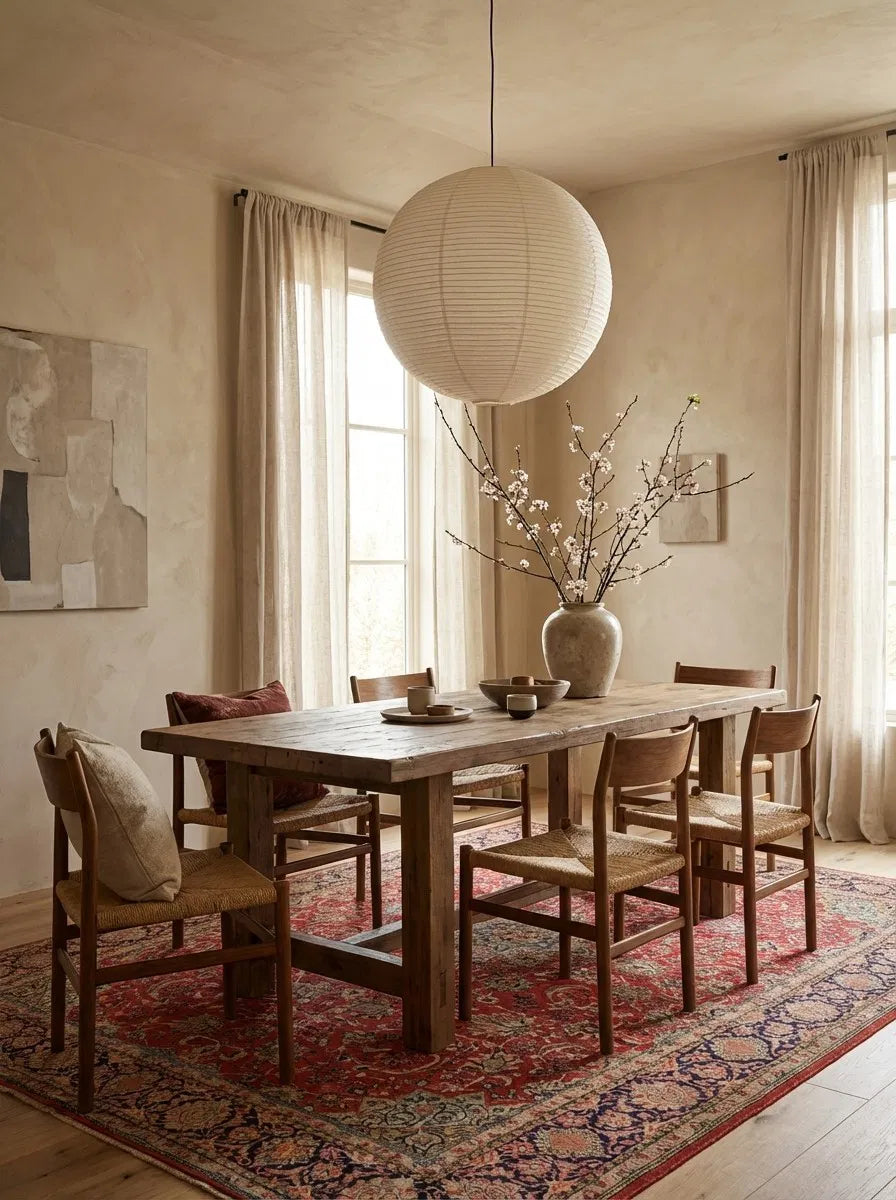
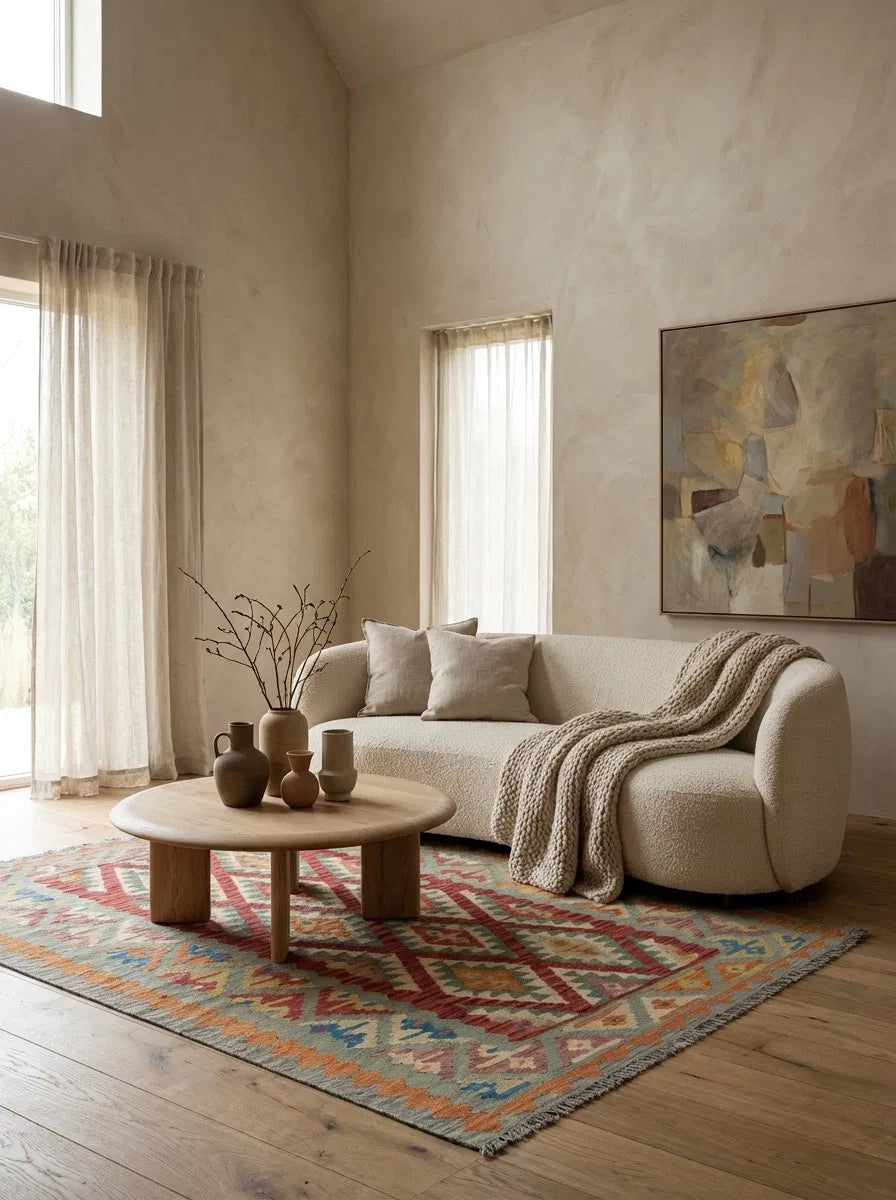
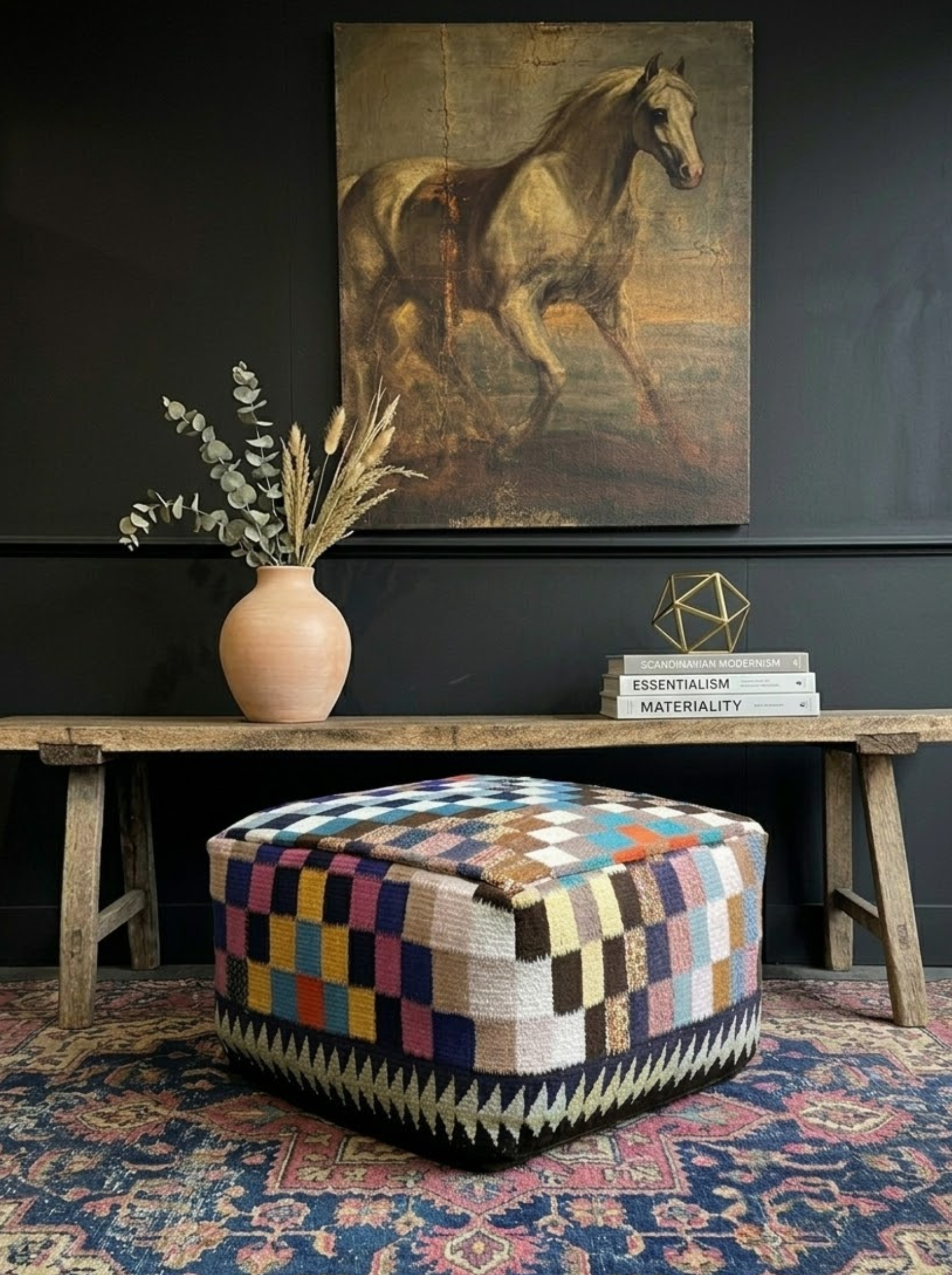
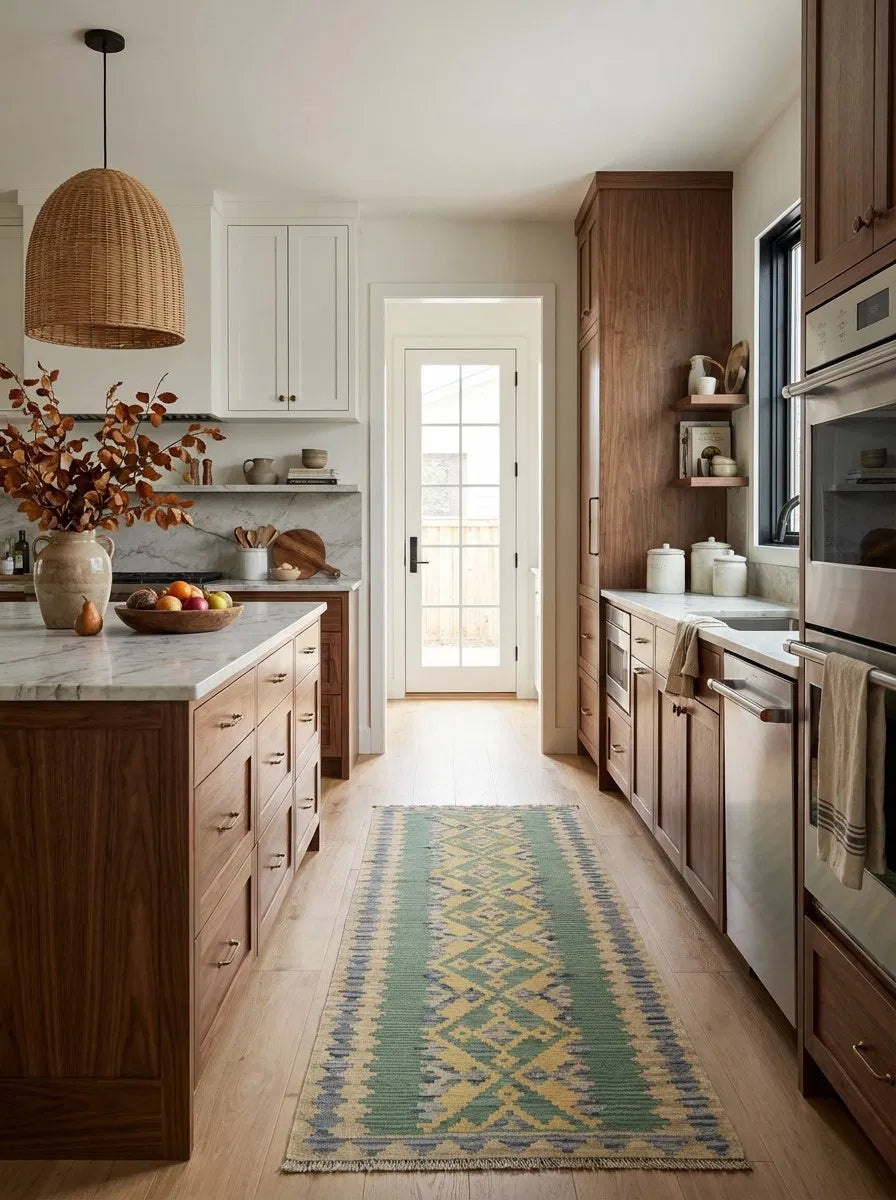
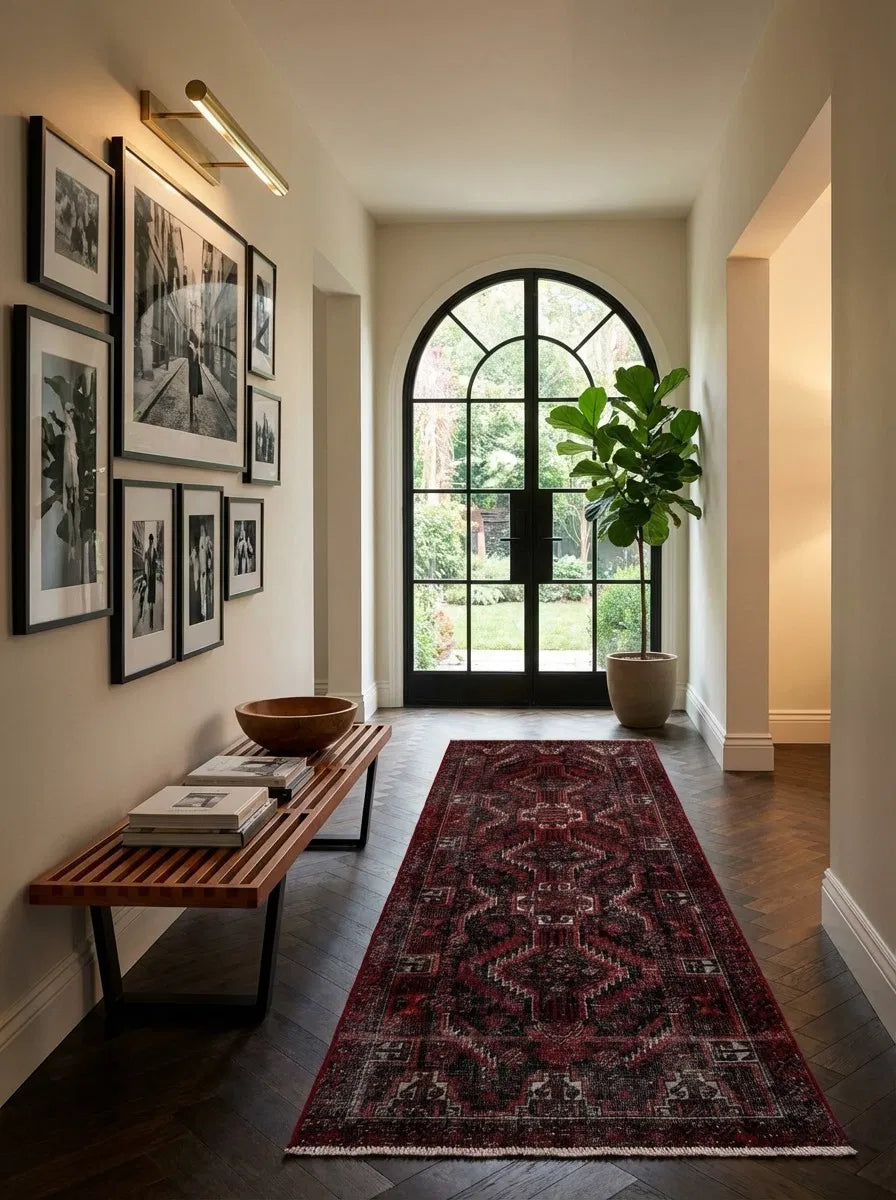
A Gashgai rug is surprisingly versatile and adds a warm, authentic accent to any interior. In minimalist rooms, it becomes a strong focal point; in Boho style, it accentuates the casualness; and in classic interiors, it provides an exciting, earthy touch. Its bold colours and honest materials immediately create a homely atmosphere.
Many believe such a distinctive rug is difficult to combine. The opposite is true. A Gashgai brings soul and history into any room. In a modern, minimalist ambience with clean lines and neutral colours, it acts like a work of art on the floor. Its bold colours and geometric patterns break up the austerity and create an inviting, warm atmosphere.
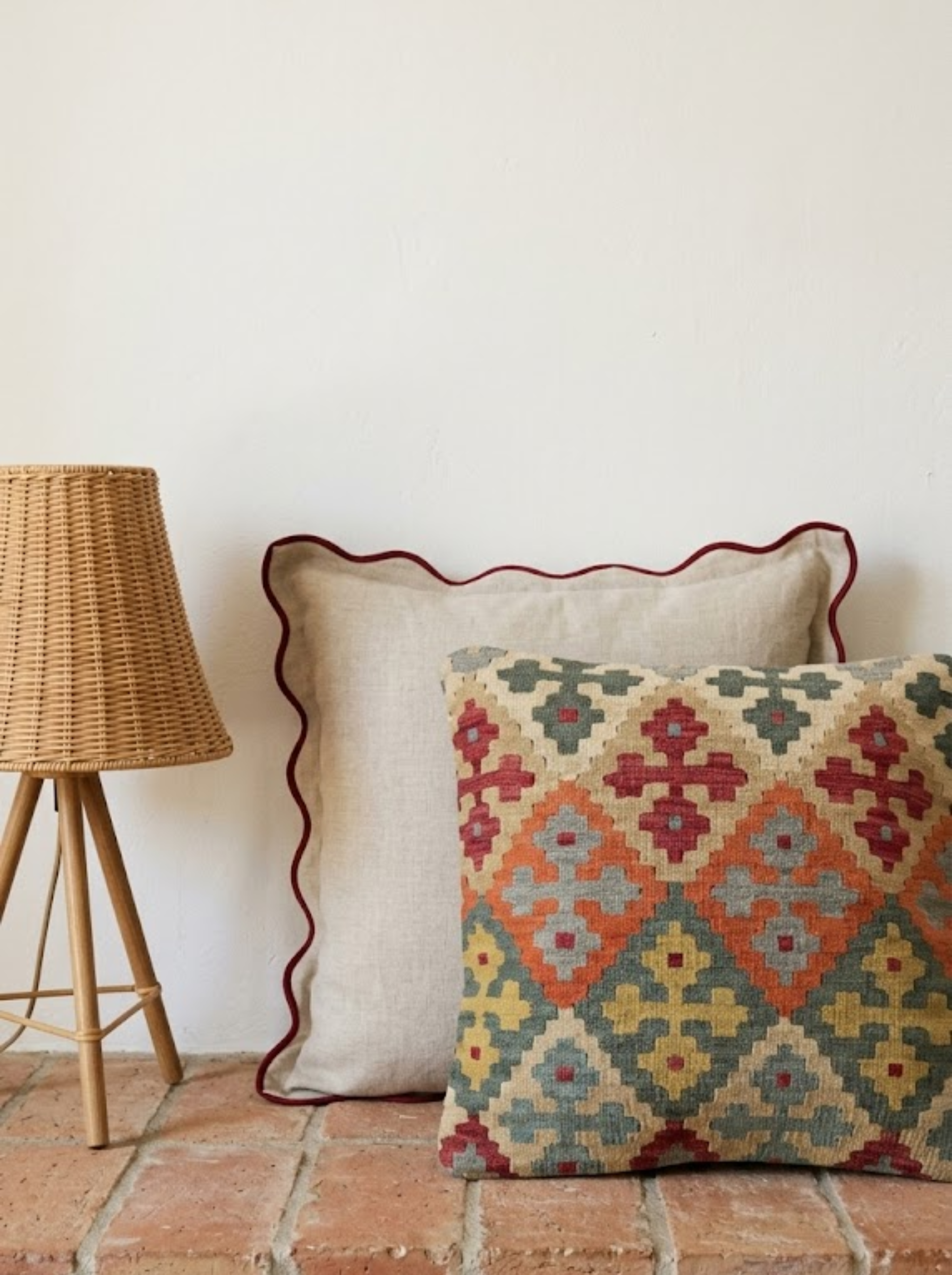
In the popular Boho or Scandi style, it blends in seamlessly. Here, it meets other natural materials like wood, linen, or rattan and accentuates the relaxed, nature-connected living feeling. But even in a classic interior, a Gashgai can create a fascinating counterpoint. It grounds the room and tells a story that goes far beyond fleeting trends. To find out how the right size works for Your room, You can use our practical AR visualiser. This allows You to project Your desired rug directly into Your room via Your smartphone. Also, the flat-woven Kelim of the Gashgai are a wonderful option to bring colour and texture into a room.
FAQ
Are Gashgai and Qashqai rugs the same? Yes, these are simply different Latin transcriptions for the same tribal name. Both terms, Gashgai and Qashqai, refer to the authentic, hand-knotted rugs of this Persian nomadic people. The quality and style are identical; it's just a matter of spelling.
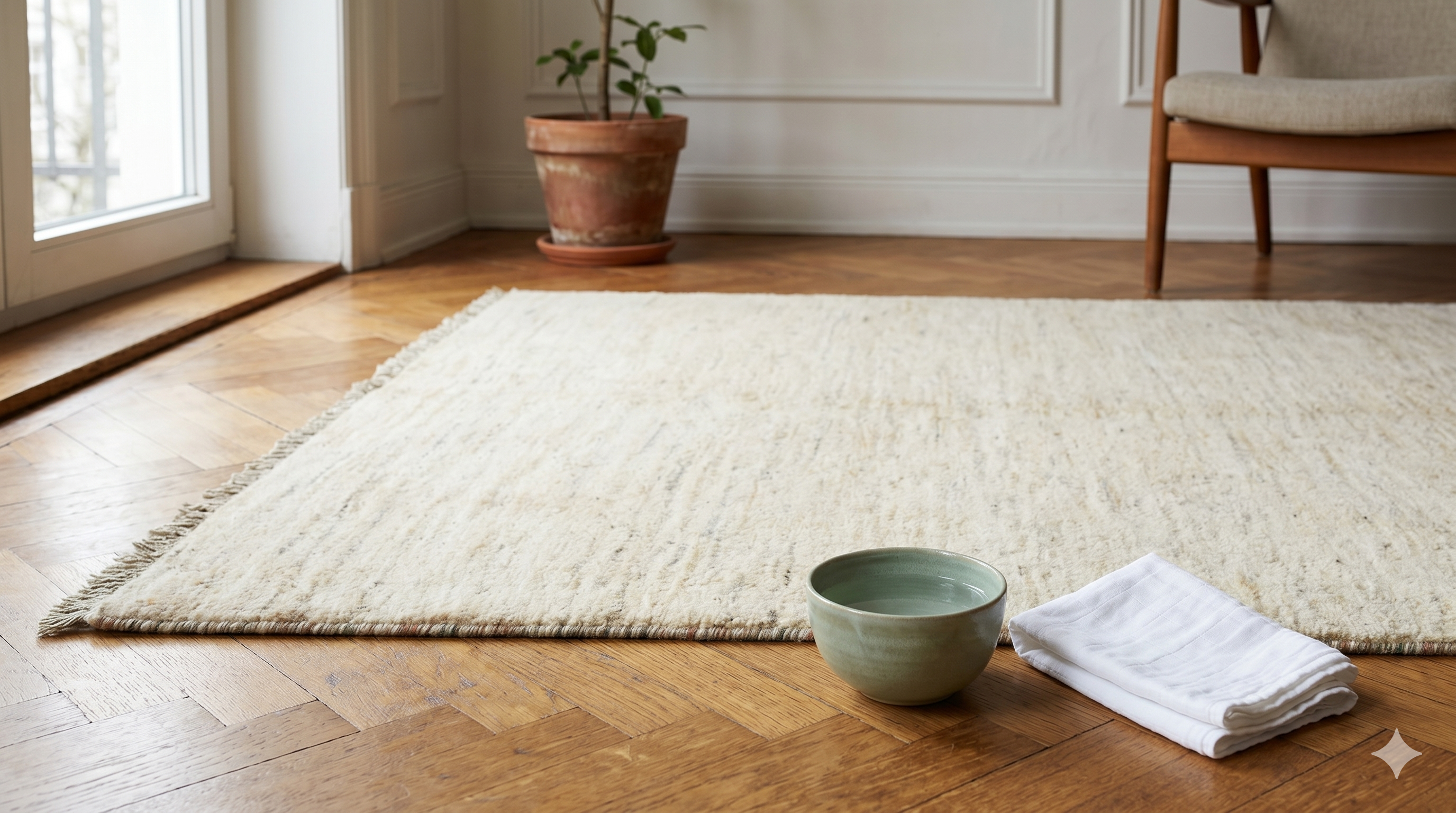
How do I properly care for my Gashgai rug? Care is straightforward. Regular vacuuming with a smooth nozzle (without rotating brushes) is sufficient for basic cleaning. For stains, You should act quickly: dab the liquid immediately with a clean, slightly damp wool cloth, without rubbing. For a deep clean, we recommend a professional hand wash every 3-5 years, which preserves the natural wool fats.
Why do Gashgai rugs often have uneven colours? These charming colour variations are called "Abrash" and are a sign of authenticity and quality. They occur because the wool is dyed by hand in small batches with natural colours. Slight differences in shade are unavoidable and prove that it is authentic handcraft and not machine production.
Is a Gashgai rug a good investment? Yes, a genuine, well-preserved Gashgai rug is a stable investment. Due to the elaborate handcraft, high-quality natural materials, and profound cultural significance, these pieces retain their value or can even increase it. They are timeless works of art that can be passed down through generations.
What is the warp of a Gashgai rug made of? The foundation of a Gashgai rug, i.e., the warp and weft threads, traditionally also consists of pure sheep's wool, less commonly robust goat hair. This distinguishes them from many city rugs, where cotton is often used for the foundation. The visible pile, which is knotted, is always made of high-quality virgin wool.
The world of the Gashgai is one full of stories, colours, and deeply rooted tradition. Every knot tells of a life in harmony with nature. If You're ready to bring such a piece of history into Your home, discover the variety in our collection. With our AR visualiser, You can directly see how a piece of nomadic soul looks in Your own space.
Find Your Gashgai in our collection of nomadic and village rugs.